
Struggling to maintain the delicate lamellar structure of your talc during ultrafine grinding? You aren’t alone. Most processors sacrifice plate integrity just to hit a target particle size. In this guide, you are going to learn the precise processing parameters for Jet Milling Talc Powder that solve this dilemma. These are proven techniques to optimize your production line today.
Industry Application Background
Talc is a critical non-metallic mineral valued for its unique lamellar (flaky) structure, lubricity, and chemical stability. In high-end industrial applications such as polymer reinforcement, coatings, and cosmetics, the market demands more than just fine powder. It requires the preservation of the talc’s natural shape. Achieving a high aspect ratio—the ratio of the particle’s diameter to its thickness—is essential for enhancing stiffness in plastics and barrier properties in paints. However, processing talc to ultrafine levels without destroying this delicate structure remains a significant technical hurdle for many manufacturers.
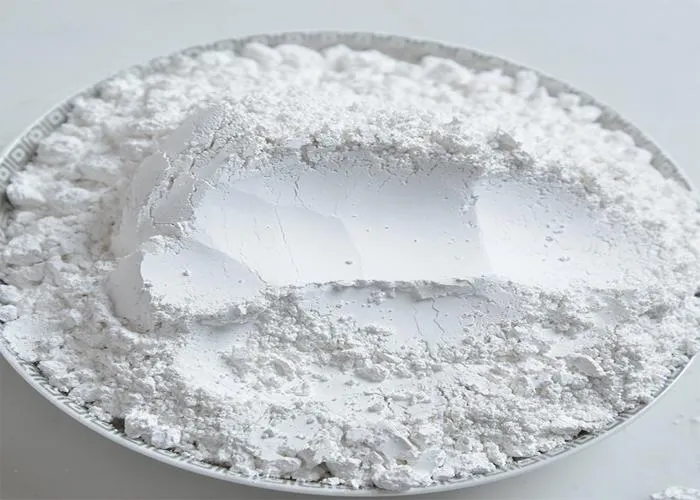
Material Grinding Challenges
Traditional mechanical milling methods often fail to meet the stringent requirements of modern talc applications. The limitations of standard grinding equipment include:
High-impact mechanical forces (like those in hammer or ball mills) tend to fracture the talc platelets rather than delaminating them, significantly reducing the aspect ratio. Conventional mills often produce a mix of overly coarse and ultra-fine particles, leading to poor dispersion and agglomeration in the final product. Contact with metallic grinding media can introduce impurities, compromising the whiteness and purity required for high-grade talc. Mechanical friction generates heat, which can negatively affect heat-sensitive grades or alter surface properties.
Why Jet Mill Technology Fits This Material
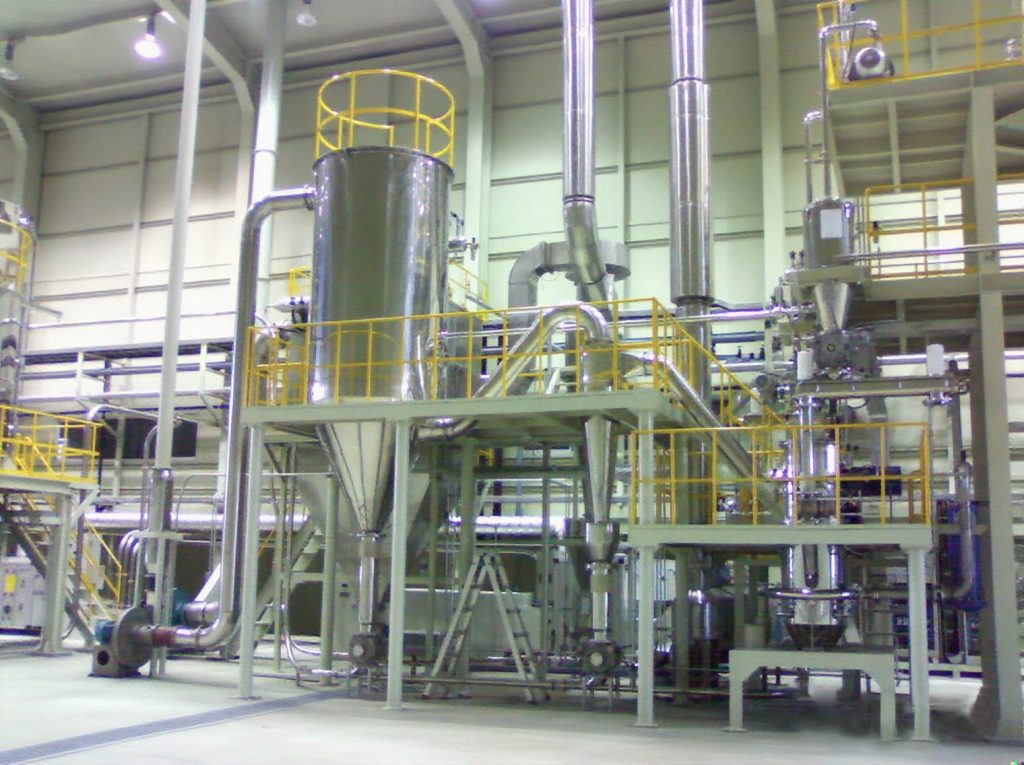
Fluidized Bed Jet Mills offer the optimal solution for processing talc by utilizing supersonic airflow rather than mechanical impact. This technology addresses the core challenges of talc processing through specific engineering advantages:
Preservation of Lamellar Structure: The grinding mechanism relies on particle-on-particle collisions driven by compressed air. This “self-grinding” process gently delaminates the talc layers, maintaining a high aspect ratio while reducing particle size.
Precision Classification: Integrated high-speed turbine classifiers allow for strict control over the Particle Size Distribution (PSD). This ensures a sharp top cut (D97) and minimizes the presence of ultrafine particles that cause clumping, resulting in excellent dispersion.
Contamination-Free Operation: To maintain high whiteness, our systems can be equipped with ceramic linings (Alumina, Zirconia, or Silicon Carbide), ensuring zero metallic contamination during the milling process.
Low-Temperature Processing: The expansion of compressed air creates a cooling effect, making jet milling an inherently low-temperature process suitable for high-quality mineral processing.
Jet Mill Working Principle
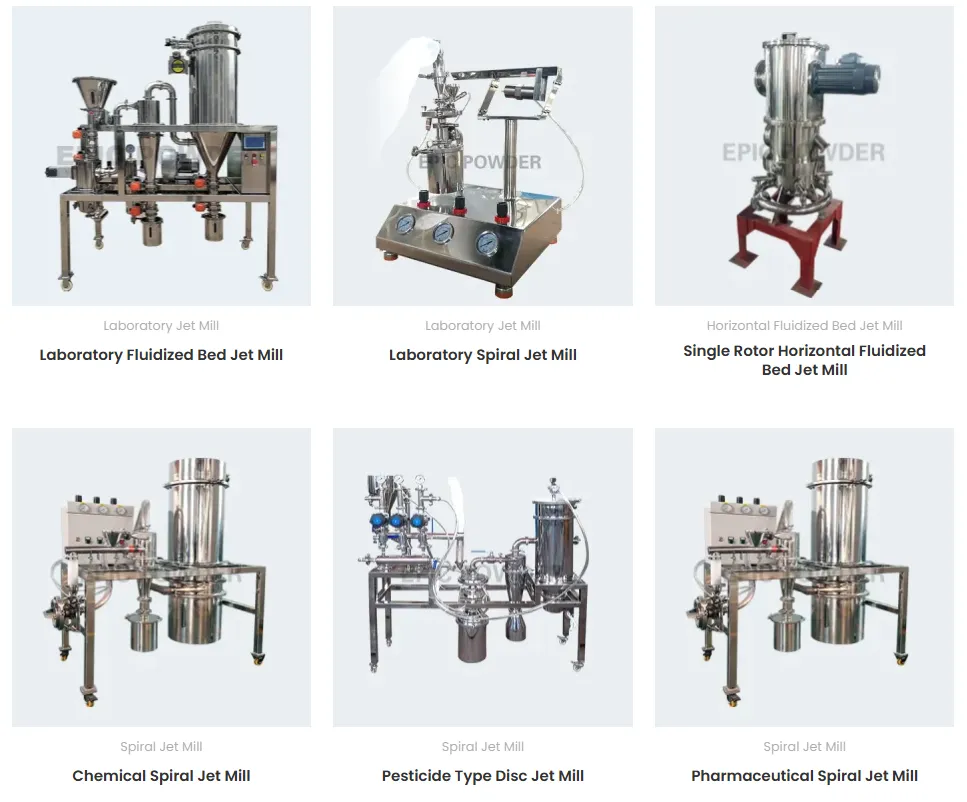
When we talk about processing talc to get that perfect lamellar structure, standard mechanical grinding just doesn’t cut it. It tends to crush the particles, destroying the aspect ratio. Our approach uses a fluidized bed jet mill principle that relies on airflow rather than heavy mechanical impact.
Here is how we handle it:
Supersonic Airflow: Compressed air is accelerated through nozzles to supersonic speeds.
Self-Grinding: This airflow drives talc particles to collide with each other. The material grinds itself, which is much gentler than hitting a steel hammer.
Classification: An integrated turbine wheel sorts the particles. Only the fines that meet the spec pass through; the rest go back down for another round.
This method preserves the “flake” shape of the talc, which is critical for stiffness in plastics and barrier properties in coatings. By using our fluidized bed jet mill systems, we ensure the delamination happens without shattering the particle structure.
Particle Size Results & Performance Benefits
Achieving a precise Particle Size Distribution (PSD) is the difference between a high-value product and cheap filler. For high-end talc applications, we target a D97 of 10μm.
Performance Impact:
| Metric | Result | Benefit |
|---|---|---|
| D97 | 10μm | Eliminated oversize particles prevent clumping in dispersion. |
| D50 | 2-3μm | Optimized for reinforcement in polymers. |
| Aspect Ratio | High | Improved stiffness and heat resistance in final products. |
Narrowing the distribution curve means excellent dispersion in paints and masterbatches. You don’t get those annoying agglomerates that ruin the surface finish.
Case Study
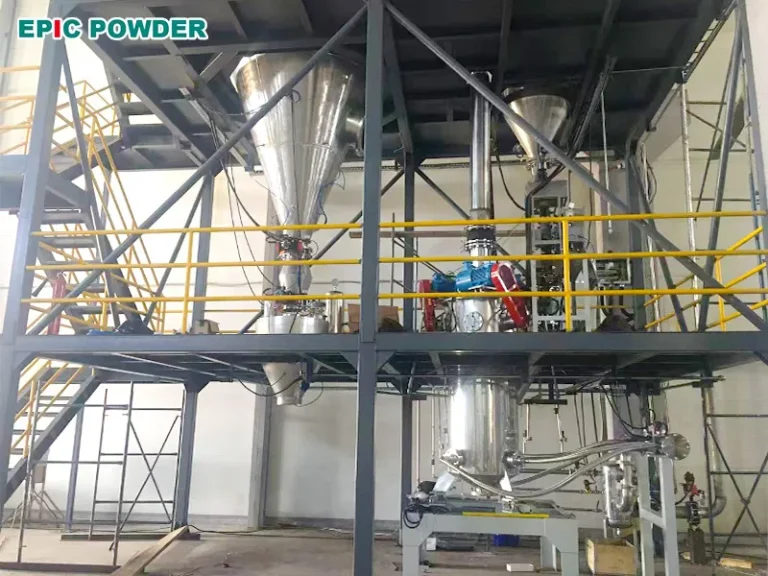
We recently configured a production line for a client needing high-throughput talc processing for the automotive plastics industry. The goal was speed without sacrificing the aspect ratio.
Project Specs:
Material: Talc (pre-crushed)
Target Fineness: 10μm
Throughput Achieved: 1200 kg/h.
By optimizing the nozzle angle and the classifier wheel speed, we maintained a stable output of 1200kg/h. The system ran with a negative pressure design, ensuring a dust-free environment and zero leakage, which kept the workshop clean and safe.
Equipment Recommendation
For industrial-scale talc production, I recommend the Epic Model MQW40. This unit is the workhorse for non-metallic mineral processing.
Key Features:
Ceramic Lining: We line the contact areas with Alumina or Zirconia. This guarantees zero metallic contamination, keeping your talc pure white.
PLC Control: Automated control over the classifier speed (RPM) ensures every batch has the exact same fineness.
Energy Efficiency: The fluidized bed design uses energy for grinding, not for wearing down machine parts.
FAQs
Q: How do you prevent talc from turning grey during milling?
A: We use abrasion-resistant ceramic linings (like Silicon Carbide or Alumina) inside the mill. This prevents metal wear debris from mixing with the white talc powder.
Q: Can this system handle heat-sensitive coatings?
A: Yes. Jet milling is a cold process. The expansion of compressed air actually lowers the temperature, making it ideal for heat-sensitive materials.
Q: Why is aspect ratio important for talc?
A: A high aspect ratio (maintaining the platy structure) improves the mechanical reinforcement properties in plastics and the barrier properties in anti-corrosion paints.
Epic Powder
Epic Powder is specialized in fine powder processing technology for mineral industry, chemical industry, food industry, pharama industry, etc. Our team has more than 20 years experience in Various powders processing and had ever designed and installed the biggest Jet Mill Line for ultra-fine barite powder production line in China.
We are a professional supplier of powder processing projects, especially powder milling, powder classifying, powder dispersing, powder classifying, powder surface treatment and waste recycling. We supply consultancy, testing, project design, machines, commissioning and training.

“Thanks for reading. I hope my article helps. Please leave a comment down below. You may also contact EPIC Powder online customer representative Zelda for any further inquiries.”
— Emily Chen, Senior Engineer