
What Is Paraffin Wax?
Paraffin wax is a ubiquitous yet often overlooked material that plays a crucial role in countless industries. In the context of jet milling—a high-precision size reduction technology—understanding its basic properties is key. So, what exactly is this common wax? At its core, paraffin wax is a soft, colorless solid derived primarily from petroleum, coal, or shale oil. It is obtained during the refining process of crude oil, specifically from the lubricating oil fraction. Chemically, it is a mixture of saturated hydrocarbons, typically consisting of long-chain alkane molecules (CnH2n+2) containing between 20 and 40 carbon atoms. This simple hydrocarbon structure is responsible for its characteristic properties. In advanced powder processing, such as jet milling, paraffin wax finds a specialized application.
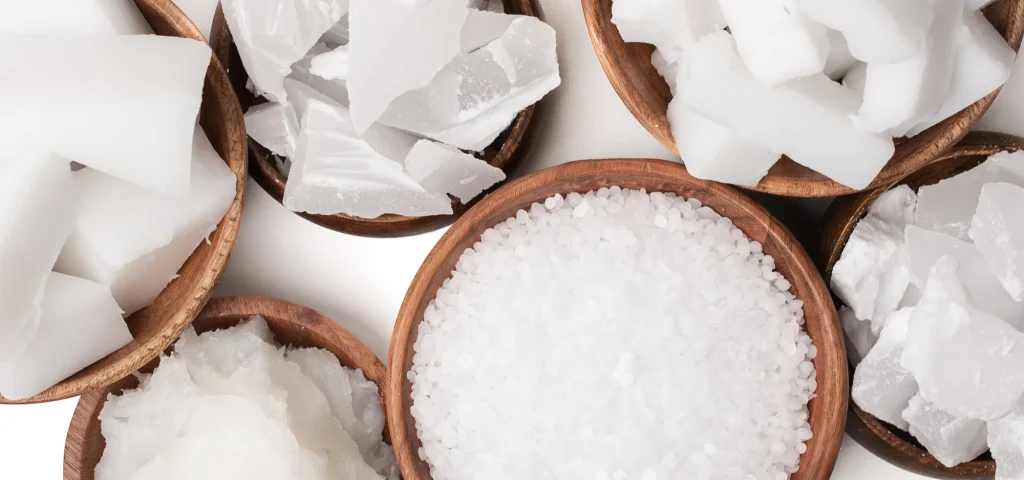
- Low Melting Point: It typically melts between 46°C and 68°C (115°F to 154°F), making it easy to liquefy with mild heat.
- Excellent Thermo-Plasticity: When melted, it becomes a low-viscosity liquid that can be molded or coated with ease.
- Chemical Inertness: It is non-reactive, stable, and resistant to moisture, acting as a superb barrier against water and air.
- Low Toxicity and Good Electrical Insulation.
These properties make paraffin wax remarkably versatile. Its most familiar use is in candle-making, but it also serves as a coating for food containers and cheeses, a softening agent in cosmetics (like lip balms), a waterproofing agent, and a crucial raw material in industries from tire manufacturing to explosives.
Certain heat-sensitive or tacky materials can be challenging to grind. By co-milling these substances with paraffin wax or pre-coating them with it, the wax acts as a grinding aid. It reduces particle agglomeration, prevents melting from heat generated during milling, and facilitates the production of ultra-fine, consistent powders. This highlights how even a simple, traditional material like paraffin wax is essential in cutting-edge technological processes.
Why Paraffin Powder Needs Ultrafine Grinding
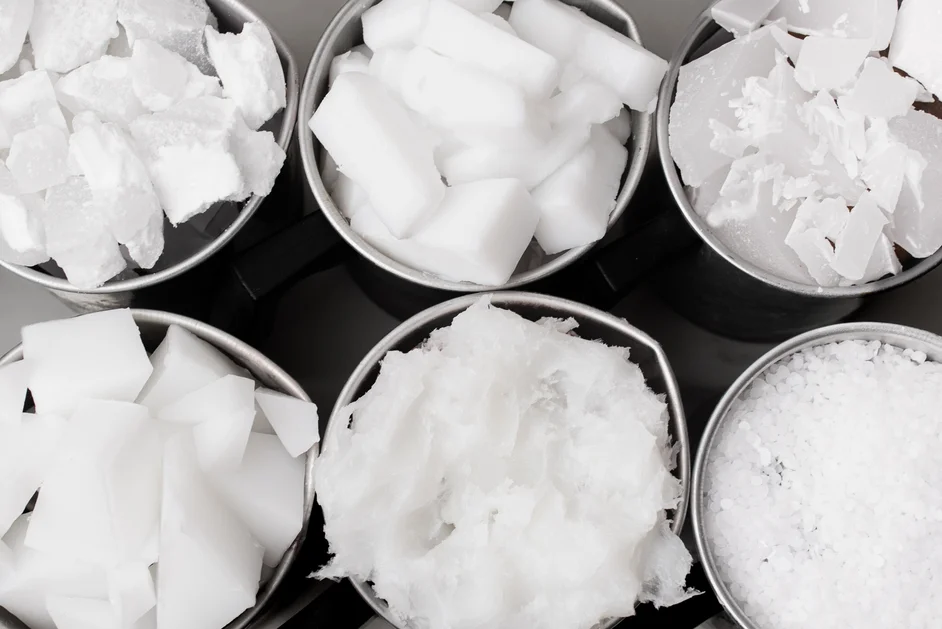
Ultrafine grinding of paraffin powder is essential to meet the demanding requirements across various industries. Producing ultrafine paraffin powder with a controlled particle size significantly improves performance, consistency, and value in end products. Let’s look at the main application fields and their typical particle size requirements:
- Hot-melt adhesive & glue industry: Paraffin powder with a particle size around 10–15μm (D97) is crucial for fast melting and smooth adhesive flow, ensuring strong bonding and reduced setting times.
- Color masterbatch & plastic processing: Fine paraffin particles (~12μm) help achieve uniform dispersion and prevent agglomeration in polymers, improving surface finish and stability.
- Rubber & tire release agents: To provide efficient mold release without residue, paraffin powders with a narrow size distribution around 10–12μm are preferred for consistent coverage.
- Precision casting (lost-wax): Ultrafine paraffin powder (6–12μm) ensures smooth wax patterns, improving mold accuracy and reducing casting defects.
- Ink & coating matting agents: Particle size control near 8–15μm is vital for uniform matting effects and consistent texture in coatings and inks.
- Food & cosmetic grade special applications: Here, particle size often needs to be extremely fine (below 10μm) with a tight distribution span to ensure safety, smoothness, and consistent sensory properties.
Particle Size, Distribution Span & Product Value
The relationship between particle size and distribution span directly impacts the added value of paraffin powders. A narrower size distribution span (usually between 0.6 and 1.0) enhances product uniformity and processing stability. This leads to:
- Improved flowability and dispersibility.
- Enhanced product performance such as better melting behavior and surface finish.
- Higher reliability in sensitive applications like cosmetics and food.
In short, ultrafine grinding using advanced milling technology—such as jet mills—enables you to produce paraffin powder that not only meets but exceeds the strict particle size requirements, unlocking greater market opportunities and delivering premium product value.
Comparison of Main Milling Technologies for Paraffin Wax Micronization
Choosing the right mill for ultrafine paraffin powder production depends on factors like particle size, capacity, temperature control, and cost. Here’s a quick rundown of main milling technologies for paraffin wax micronization and how they stack up:
| Technology | Finest D97 Achievable | Capacity Level | Temperature Control | Particle Shape | Energy Consumption | Investment Cost | Ease of Cleaning |
|---|---|---|---|---|---|---|---|
| Mechanical Mill | ~20-40 μm | ★★★ | △ | Irregular | ★★★ | ★★★ | ★★★ |
| Air Classifier Mill | ~12-25 μm | ★★ | △△ | Irregular-sharp | ★★ | ★★ | ★★ |
| Fluid-bed Opposed Jet Mill | 6-15 μm | ★★★–★★★★ | ★★★★ | Near-spherical | ★ | ★ | ★ |
| Spiral Jet Mill | 2-12 μm | ★–★★ | ★★★★ | Near-spherical | ★ | ★★ | ★★★★ |
Among these, the fluidized bed opposed jet mill — like the Epic Powder MQW series — stands out. It offers excellent temperature control, essential for low melting point paraffin wax, and near-spherical particles that improve powder flow and dispersibility. Plus, it supports high output even at fine sizes (D97 around 10-12 μm) with low contamination risk.
If you want a reliable, energy-efficient solution for superfine paraffin powder production, the fluid-bed opposed jet mill is often the best choice. For more insights on ultrafine powder preparation, check out our guide on air jet milling technology.
Advantages of Fluidized Bed Opposed Jet Mill for Paraffin Powder Production
The fluidized bed opposed jet mill stands out when producing ultrafine paraffin powder thanks to its precise temperature control. Since paraffin wax has a low melting point, keeping grinding temperatures stable prevents melting and agglomeration during jet mill paraffin micronization.
This technology also delivers a very narrow particle size distribution, with span values typically between 0.6 and 1.0, ensuring consistent quality and predictable performance. The absence of sieves and high-speed moving parts in the grinding zone minimizes contamination risks, making it ideal for sensitive applications.
Another big plus is the excellent particle sphericity produced by this fluidized bed jet mill. Near-spherical paraffin powder means better flowability and easier dispersibility in downstream processes like hot-melt adhesives or coatings. Plus, even at fine fineness levels (D97 ≤ 12μm), the equipment maintains high output capacity, ideal for large-scale superfine paraffin production.
For those looking deeper into the technology behind paraffin wax air jet milling, exploring detailed jet mill definitions and explanations is highly recommended.
Real Production Case – Epic Powder MQW Jet Mill Line for Paraffin
Let’s look at a real-world example of ultrafine paraffin powder production using the Epic Powder MQW jet mill series. Here’s the project snapshot:
- Material: Fully refined paraffin wax with a melting point around 58-60°C
- Target particle size: D97 approximately 11μm, ideal for high-performance uses
- Final output: Steady capacity ranging 320 to 350 kg/h, averaging about 330 kg/h
- Equipment: MQW35-40 fluidized bed opposed jet mill designed for stable and precise grinding
The process focuses on maintaining excellent temperature control to prevent melting while achieving a tight particle size distribution — typically a span value near 0.7. This results in consistent powder quality perfectly suited for demanding sectors like hot-melt adhesives and precision casting.
In terms of operational data, power consumption and compressed air usage are carefully optimized to boost efficiency without sacrificing fineness. For this project, power consumption remains moderate thanks to the fluidized bed opposed jet mill’s advanced design.
Before and after photos illustrate a clear transformation: coarse paraffin wax flakes feed in, and the finished ultrafine powder flows out with near-spherical particles and excellent dispersibility.
This case underlines the MQW jet mill’s capability for producing superfine paraffin powder at industrial-scale outputs, balancing high quality with cost-effective operation. For similar applications, the MQW series offers a reliable solution for paraffin wax air jet milling.
You can explore similar high-purity powder processing technologies in our detailed discussion on chemical spiral jet mills for further insights into advanced micronization techniques.
How to Select the Right Jet Mill Model for Your Paraffin Powder Project
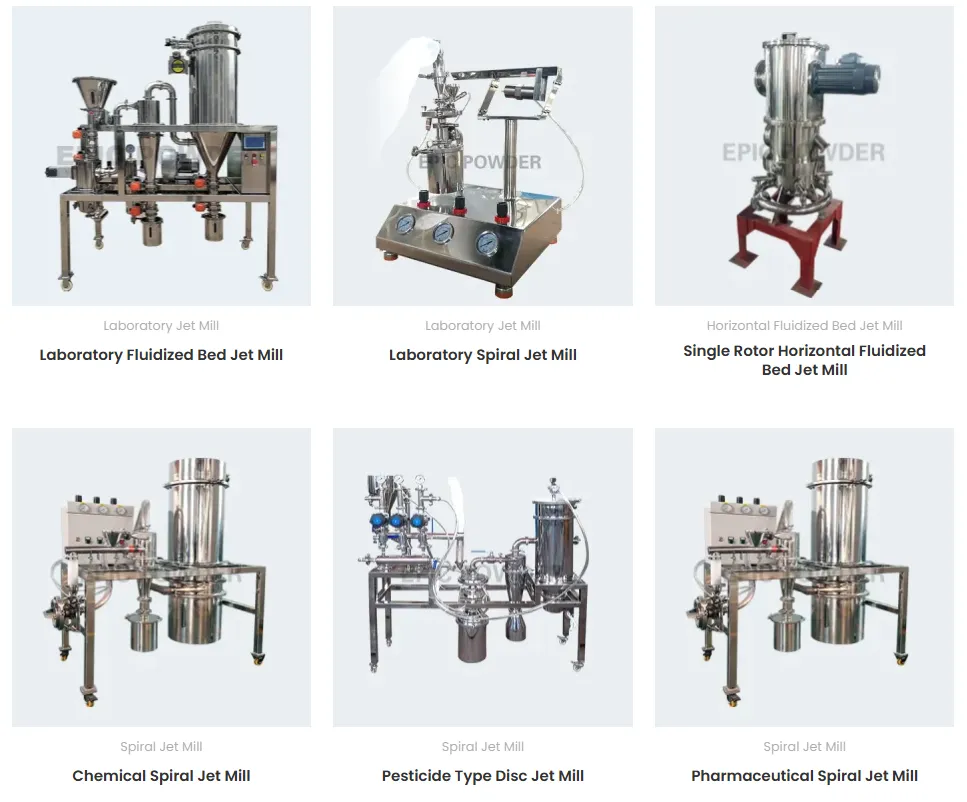
Choosing the right jet mill for producing ultrafine paraffin powder depends on several key factors. Here’s a checklist to guide your decision:
- Target D97 & acceptable top-cut: Define the maximum particle size you need, such as D97 around 10-12μm for most precision applications.
- Required capacity (kg/h): Match mill size to your production volume—jet mills like the MQW series offer outputs from a few dozen to several hundred kilograms per hour.
- Upstream paraffin quality: Consider melting point and oil content since these affect grinding temperature control and product consistency.
- Downstream application requirements: Different uses, from hot-melt adhesives to cosmetic grade powders, demand specific particle size distribution and purity.
- Budget & ROI expectations: Factor in initial investment, operating costs, and how quickly you expect to recover costs from improved product value.
Quick Selection Guide
| Jet Mill Model | Capacity (kg/h) | D97 Range (μm) | Notes |
|---|---|---|---|
| MQW20-30 Fluidized Bed | 100-150 | 8-12 | Mid-range output, narrow span |
| MQW35-40 Fluidized Bed | 300-350 | 10-12 | High capacity, optimal for bulk |
| Spiral Jet Mill | 50-120 | 2-12 | Finest particle size, lower output |
Important Warning Points When Milling Paraffin
- Temperature control is critical due to low melting point—overheating can cause clogging or agglomeration.
- Avoid high oil content feedstock that may lead to nozzle blockage.
- Regular maintenance on nozzles ensures consistent particle size and prevents downtime.
- Ensure compatible mill design if switching between paraffin grades with different melting points.
For detailed options on high-output, low-temperature jet mills, explore our range of horizontal fluidized bed jet mills designed specifically for ultrafine paraffin powder production. Proper mill selection ensures efficient grinding, minimal contamination, and better end-product quality to meet your market needs.
Frequently Asked Questions about Jet Milling Paraffin
Will paraffin stick to the nozzles?
Thanks to the fluidized bed opposed jet mill design, paraffin powder rarely sticks to the nozzles. Precise temperature control keeps the paraffin below its melting point, preventing adhesion and buildup.
How to prevent blockage during production?
- Maintain consistent airflow and compressed air pressure.
- Regularly monitor the feed rate to avoid overloading.
- Keep the grinding chamber temperature controlled to prevent melting.
- Use proper cleaning cycles between batches.
What is the typical service life of nozzles when grinding paraffin?
Nozzle lifespan varies by operating conditions but generally ranges from 1,000 to 2,000 hours. Using high-quality materials and maintaining temperature control prolong nozzle life.
Can the same line handle different melting point paraffins?
Yes. The MQW fluidized bed jet mill can adjust grinding temperature and airflow to suit paraffins of varying melting points, making it versatile for multiple grades.
Difference in price & performance between domestic & imported jet mills
| Feature | Domestic Jet Mill | Imported Jet Mill (e.g., MQW series) |
|---|---|---|
| Price | Lower | Higher |
| Grinding Fineness (D97) | ~15μm | Down to 10-12μm |
| Capacity Potential | Moderate | High (300+ kg/h) |
| Temperature Control | Basic | Advanced, precise |
| Particle Shape | Irregular | Near-spherical |
| Maintenance & Cleaning | More complex | Easier, minimal contamination |
Imported jet mills provide better ultrafine paraffin powder quality with narrower particle distribution and higher output, justifying the investment for large-scale applications.
Epic Powder
The Epic Powder Inertia Protection Jet Mill stands out as the ideal choice for high-demand powder processing, offering exceptional grinding efficiency and precise particle size control. Whether it’s kaolin, chemical materials, or specialty powders, Epic Powder delivers efficient, energy-saving, and environmentally friendly solutions. We are committed to creating greater value for our customers through innovative technology and comprehensive after-sales support.
Choose Epic Powder for quality and reliability. Contact us today for a customized solution and experience industry-leading powder processing technology!

“Thanks for reading. I hope my article helps. Please leave a comment down below. You may also contact EPIC Powder online customer representative Zelda for any further inquiries.”
— Jason Wang, Senior Engineer