
If you’re going to order laboratory jet mills for your R&D projects, mastering precision micronization is a game-changer. Whether you’re refining particle sizes or optimizing material properties, the right approach can push your research to the next level. In this comprehensive guide, you’ll get clear, actionable insights on how to harness the full potential of these powerful tools.
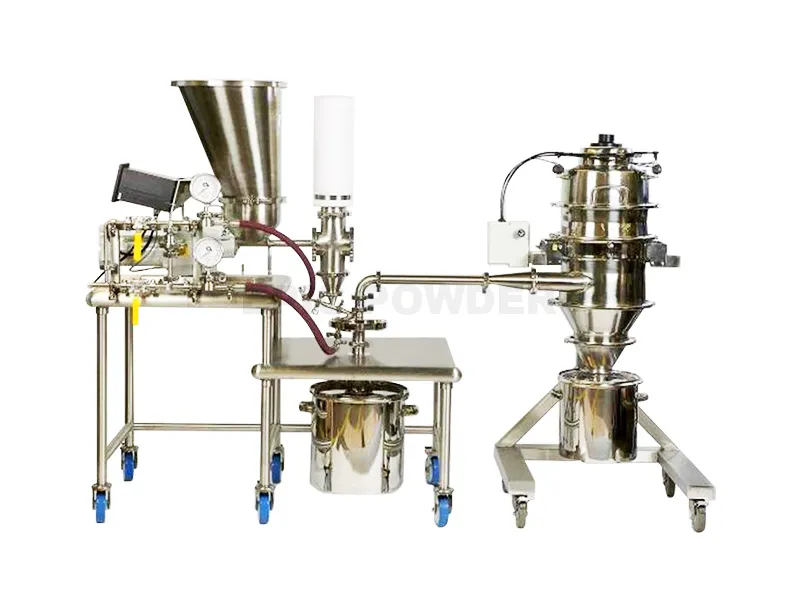
In the world of research and development, quality control, and small-batch production, achieving precise and consistent particle size reduction is a fundamental requirement. From micronizing active pharmaceutical ingredients for bioavailability studies to processing delicate botanical extracts and advanced ceramic powders, the technology behind the process is critical. Enter the laboratory jet mill—a sophisticated device engineered on the principle of particle-on-particle impact using high-speed gas streams. Unlike traditional mechanical crushers with grinding media, a laboratory air jet mill offers contamination-free, low-heat, and highly controllable micronization. making it the gold standard for processing heat-sensitive, valuable, or high-purity materials. This in-depth guide explores the operational principles, core advantages, and key applications of laboratory air jet mills, illustrating why they are indispensable in modern laboratories across pharmaceuticals, chemicals, food science, and advanced materials research.
Core Working Principle
A laboratory air jet mill operates on a elegantly simple yet highly efficient principle. It uses kinetic energy from compressed gas to achieve ultra-fine milling through inter-particular collision. There are no rotating blades or grinding media that contact the material. It is the key to its purity and cool operation. The process is a continuous cycle:
Material is fed into a grinding chamber. High-pressure gas (air, nitrogen, or inert gases) is injected through specially designed nozzles, creating supersonic jets. These jets entrain the feed particles, accelerating them to extremely high velocities. Within the chamber, these high-velocity streams intersect. Particles from opposing jets collide with each other hekad-on, resulting in size reduction primarily through high-velocity impact and attrition. This self-grinding mechanism ensures the product is not contaminated by worn equipment parts.
The micronized particles are carried by the gas stream towards an integrated dynamic classifier (often a rotating wheel or static vortex). This classifier acts as a precision gatekeeper: particles fine enough to meet the target size bypass it and enter the collection system (cyclone and filter bag). Oversized particles are rejected by the classifier’s centrifugal force and recycled back into the grinding zone for further micronization. This internal classification loop is what allows for the exceptionally narrow particle size distribution (PSD) that jet mills are famous for.
Key Technical Advantages of Laboratory Jet Mills
The unique operating principle translates into a suite of compelling benefits for laboratory applications:
Ultra-Fine & Narrow Particle Size Distribution: Capable of achieving d50 values in the low micron (1-10 µm) or even sub-micron range with a very tight PSD, which is crucial for product performance in catalysts, coatings, and pharmaceuticals.
Contamination-Free & High-Purity Grinding: Since size reduction occurs via particle collision and there are no moving parts in the grinding zone, there is minimal risk of metallic or ceramic wear contamination. This is vital for high-value materials like battery powders, semiconductor precursors, and APIs.
Low-Temperature Operation: As the compressed gas expands at the nozzles, it undergoes adiabatic cooling (Joule-Thomson effect). This intrinsic cooling effect makes jet mills ideally suited for heat-sensitive materials such as polymers, waxes, spices, resins, and many organic compounds that would degrade in mechanical mills.
Versatility in Feed Materials: Effectively processes a wide range of materials from soft and fibrous (e.g., plant fibers, certain polymers) to extremely hard (e.g., ceramics, metal alloys), provided they are brittle enough to fracture upon impact.
Scalability: Processes developed on a laboratory-scale jet mill can be reliably scaled up to production-sized units, as the fundamental physics of jet milling remain consistent. This de-risks process development and technology transfer.
Critical Parameters for Optimal Performance
To harness the full potential of a laboratory jet mill, understanding and controlling its key operating parameters is essential:
Grinding Gas Pressure & Type: This is the primary driver of particle velocity and energy. Higher pressure (typically 4-10 bar for lab units) results in finer particles. The choice of gas (compressed air, nitrogen for oxygen-sensitive materials, or argon) is also critical for product integrity.
Feed Rate: Must be precisely controlled and optimized. An excessively high feed rate can overload the grinding zone, reducing collision efficiency and coarsening the product. A low feed rate maximizes fineness but reduces throughput. Modern units feature precise screw feeders.
Classifier Speed: In mills with a rotating classifier wheel, the wheel speed is the most direct control for setting the top particle size. A higher rotational speed allows only finer particles to escape, yielding a finer product.
Gas-to-Solid Ratio: The balance between the mass flow of gas and feed material. An optimal ratio ensures sufficient kinetic energy is available for particle acceleration and breakage.
Influence of Working Temperature on Jet Milling Efficiency
Gas temperature directly impacts jet velocity in pharmaceutical jet mills. When gas is heated, its molecules move faster, increasing the speed at which the gas exits the nozzle. This higher jet velocity translates to stronger impact forces on the particles, improving grinding efficiency.
Comparison of critical air velocity at different temperatures
| Temperature (°C) | Critical Air Velocity (m/s) |
| 20 (room temp) | 300 |
| 100 | 340 |
| 200 | 380 |
| 300 | 420 |
How to Choose the Right Lab Jet Mill
Selecting the right lab jet mill is crucial for consistent, high-quality micronization in R&D and production. Here’s what you should focus on:
| Parameter | Importance |
| Feed size | Controls grinding efficiency; improper feed size can cause clogging or low output. |
| Target particle size | Determines milling settings and type of jet mill; crucial for product specs. |
| Temperature sensitivity | Helps decide suitable gas and cooling options, preserving sensitive APIs. |
| Pressure and gas type | Affects jet velocity and grinding energy; matches material properties. |
| Equipment supplier | Ensures reliable support, maintenance, and tech innovations. |
Why Choose an Epic Powder Laboratory Air Jet Mill?
Epic Powder’s laboratory air jet mills systems featuring:
GMP-Ready & Hygienic Design: Constructed from high-grade 316L stainless steel with polished internal surfaces, crevice-free welds, and easy disassembly for complete and rapid cleaning or product changeover. Compliant with pharmaceutical and food industry standards.
Intelligent Control & Data Integrity: Our units have PLC interfaces that allow for precise digital control and all critical parameters (pressure, feed rate, classifier speed). This ensures excellent batch-to-batch reproducibility and supports QbD (Quality by Design) initiatives.
Enhanced Safety & Containment: Designed for safe handling of potent compounds or explosive materials, featuring integrated containment systems, pressure reliefs, and the option for full inert gas circulation.
Compact & Ergonomic Footprint: Designed for the modern lab bench, saving valuable space while providing quiet, vibration-free, and dust-free operation.
Epic Powder
A laboratory air jet mill is more than just a grinder. It is a precision instrument for material engineering at the micron scale. It has ability to deliver contamination-free, cool, and tightly controlled micronization. So it is an irreplaceable asset for any R&D or QC lab working with advanced materials, pharmaceuticals, or specialty chemicals. By choosing a well-designed system from Epic Powder, you invest reliability, scalability, and purity of your research outcomes. For applications where particle size defines product performance, the laboratory air jet mill is the definitive solution.
Ready to achieve unparalleled precision in your particle size reduction?
Contact Epic Powder’s technical experts today for a consultation on selecting the ideal laboratory air jet mill for your material.

“Thanks for reading. I hope my article helps. Please leave a comment down below. You may also contact EPIC Powder online customer representative Zelda for any further inquiries.”
— Posted by Emily Chen, Senior Engineer