
When it comes to producing sodium battery cathode powders, purity isn’t just important—it’s everything. Whether you’re working with Prussian Blue, White analogues, or sodium carbonate, controlling contamination and achieving the right particle size and morphology can make or break your battery’s performance. If you want to push the limits of electrochemical efficiency, understanding why jet milling stands out as the unrivaled technology for creating high-purity, battery-grade powders is essential. Let’s discover how jet milling transforms sodium battery material synthesis from lab scale to full production.
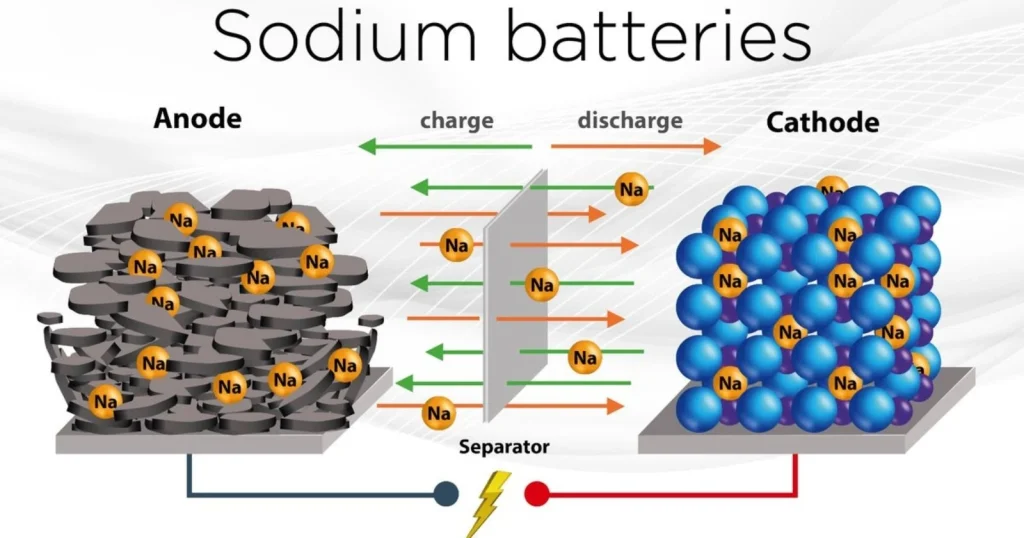
The Purity Imperative in Sodium Battery Material Synthesis
Why Contamination Control is Critical for Prussian Blue, White, and Sodium Carbonate
In sodium battery cathode powder production, maintaining ultra-high purity is essential. Materials like Prussian Blue, its white analogues, and sodium carbonate serve as key components in battery chemistry, where even trace contaminants can severely degrade performance and cycle life. Contamination risks arise during milling and handling, introducing metal ions or unwanted debris that compromise electrochemical stability. Therefore, precise contamination control is critical to ensure consistent, battery-grade material quality. High-purity powders directly translate to better conductivity, stability, and overall battery efficiency.
The Role of Particle Size and Morphology in Electrochemical Performance
Particle size and morphology strongly influence the electrochemical behavior of sodium battery cathodes. Ultrafine, uniformly sized particles increase the active surface area, promoting faster sodium-ion diffusion and more efficient charge transfer. Moreover, well-controlled particle shapes and smooth surfaces enhance packing density, improving volumetric energy density and mechanical integrity. Thus, achieving optimized particle size distribution and morphology is vital to maximize performance and longevity in sodium-ion batteries. This makes advanced milling techniques, such as jet milling, indispensable in the synthesis of high-performance sodium battery cathode powders.
Why Jet Mills Are Unmatched for High-Purity Milling
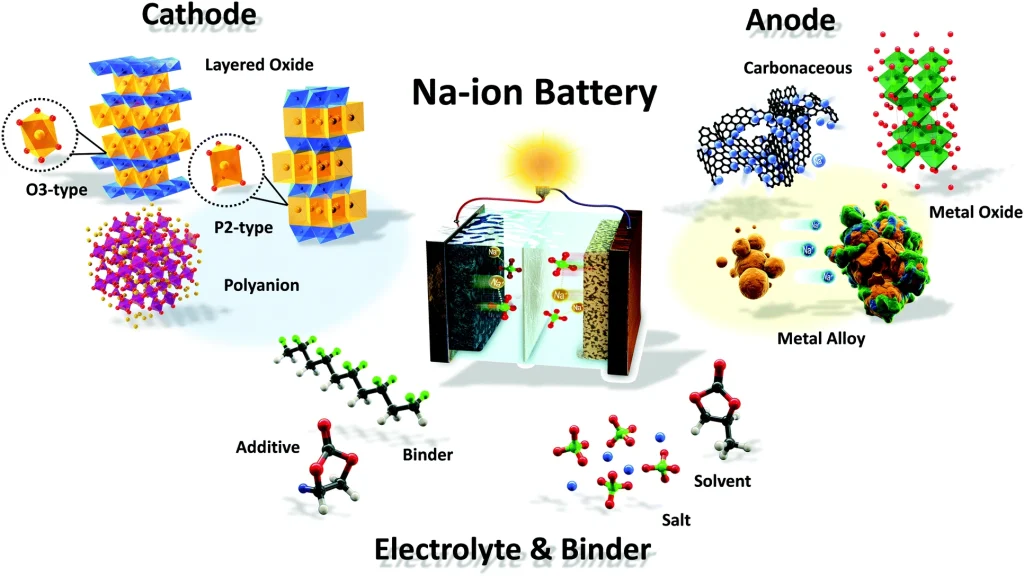
Principle of Purity: Wear-Free, Media-Free Grinding for Battery-Grade Powders
When producing sodium battery cathode powders like Prussian Blue and sodium carbonate, purity is non-negotiable. Jet mills stand out because they use high-speed compressed air to grind particles without the need for grinding media or mechanical contact. This wear-free, media-free process virtually eliminates contamination risk, ensuring battery-grade powders remain ultra-pure—critical for maintaining consistent electrochemical performance and battery lifespan.
Spheroidization Effect: How Jet Milling Can Improve Particle Morphology and Tap Density
Beyond purity, jet milling refines particle shape through its intense pneumatic forces. This spheroidization effect rounds particles, which improves powder flowability and increases tap density. For sodium battery cathodes, better morphology means more efficient packing and improved conductivity within the electrode — boosting overall cell performance.
Inherent Cooling: Protecting Temperature-Sensitive Compounds During Processing
Another key advantage is the inherent cooling effect during jet milling. The rapid airflow removes heat, preventing thermal degradation of sensitive compounds like Prussian Blue and sodium carbonate. This controlled temperature environment preserves chemical stability and prevents unwanted phase changes that could harm battery effectiveness. For a deeper understanding of temperature effects on powders, check out our detailed article on how temperature affects powder flowability.
Optimizing Key Sodium Battery Materials with Jet Milling
Prussian Blue & White Analogues: Achieving Ultrafine Size Without Structural Damage
Jet milling is ideal for producing ultrafine Prussian Blue and its white analogues used in sodium battery cathodes. Unlike mechanical mills, jet mills operate without grinding media, avoiding contamination and preventing structural damage to these fragile compounds. This keeps their electrochemical properties intact while enabling particle sizes in the sub-micron range — critical for enhancing battery performance.
Sodium Carbonate (Na₂CO₃): Precise Sizing for Anode Pre-cursor or Additive Applications
Sodium carbonate powders serve as essential anode precursors or additives. Uniform, well-controlled particle size improves mixing and reaction efficiency. Jet milling precisely reduces and classifies Na₂CO₃ particles to a tight distribution, promoting better downstream processing and consistent battery quality.
Process Parameters: Tailoring Air Pressure and Classifier Speed for Different Materials
Adjusting jet mill settings lets you fine-tune particle size and morphology according to material type:
| Material | Air Pressure | Classifier Speed | Outcome |
|---|---|---|---|
| Prussian Blue Analogues | Medium (4-6 bar) | Moderate (2000-3500 rpm) | Ultrafine, undamaged particles |
| Sodium Carbonate | Higher (6-8 bar) | Higher (3500-4500 rpm) | Uniform, narrow PSD |
This customization ensures each sodium battery material reaches optimal size for enhanced electrochemical performance without compromising purity.
For a closer look at selecting jet mill types based on your powder characteristics, explore our detailed guide on choosing a suitable jet mill.
The Epic Powder Advantage: Tailored Jet Mill Solutions for Battery R&D and Production
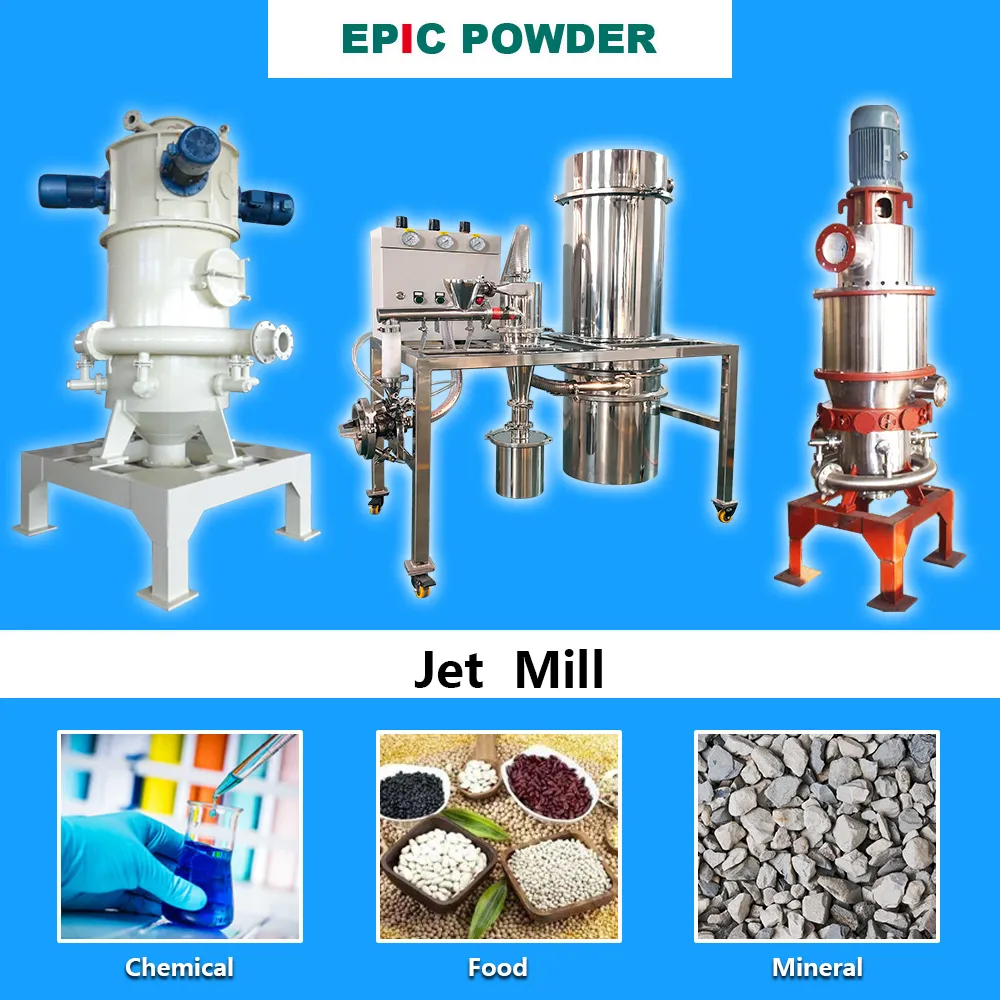
Scalable Solutions: From Lab-Scale Feasibility to High-Volume Production with MQW Series
Epic Powder’s MQW series jet mills are built to grow with your project—from initial R&D to full-scale manufacturing. Whether you’re testing sodium battery cathode powders like Prussian Blue or sodium carbonate at the lab scale or moving to mass production, these mills deliver consistent particle size distribution (PSD) and purity every step of the way. Their flexible design supports quick adjustments in air pressure and classifier speed, making it easy to optimize milling parameters as your process evolves without compromising quality.
GMP-Ready Design: Supporting the Transition from Pilot to Commercial-Scale Manufacturing
Meeting stringent quality standards is crucial for battery materials, especially when scaling production. Epic Powder jet mills come with a GMP-ready design, ensuring contamination control and easy cleaning protocols. This means your cathode powder production maintains high purity and structural integrity whether you’re running small pilot batches or full commercial volumes. The wear-free, media-free milling technology also minimizes risk of contamination—critical for sensitive materials like Prussian Blue and white analogues.
Data-Driven Results: Case Studies on Achieving Target PSD and Purity for Cathode Materials
Our clients have consistently met tight specifications for PSD and chemical purity using Epic Powder jet milling solutions. For example, jet milling sodium carbonate with tailored air pressure settings helped one manufacturer reduce agglomerates while achieving a narrow particle size range perfect for anode precursor applications. Another case involved ultrafine milling of Prussian Blue powders without damaging crystal structure, enhancing electrochemical performance. This data-backed approach highlights how precise jet milling can unlock the full potential of sodium battery cathode powders with reproducible results.
For a deeper dive into the jet milling process and its benefits for high-purity materials, check out our detailed analysis of the jet milling process.
Common Questions on Jet Milling Battery Materials (Q&A)
How Does Jet Milling Compare to Ball Milling for Prussian Blue Compounds?
Jet milling offers distinct advantages over ball milling when it comes to processing Prussian Blue compounds. Unlike ball milling, which involves grinding media that can introduce contamination and structural damage, jet milling uses high-velocity gas streams to grind particles without any wear elements. This wear-free, media-free process preserves the chemical purity and structural integrity essential for high-performance sodium battery cathode powders.
Additionally, jet milling produces a narrower particle size distribution and can achieve ultrafine sizes without causing the mechanical stress that often leads to crystal structure breakdown in ball milling. The inherent cooling effect in jet milling also protects temperature-sensitive Prussian Blue materials from thermal degradation. Overall, jet milling ensures a cleaner, more consistent powder ideal for battery cathodes.
Can Jet Milling Handle the Agglomeration Common in Sodium Carbonate Powders?
Yes, jet milling is highly effective at addressing the agglomeration issues frequently encountered with sodium carbonate powders used in sodium battery anodes or as additives. The high-velocity gas flows and classifier adjustments in a jet mill break down agglomerates efficiently, resulting in a uniform and precise particle size distribution.
Moreover, the spheroidization effect during jet milling improves particle morphology and tap density, helping reduce problems caused by clumping or uneven powder flow in downstream battery manufacturing processes. By optimizing air pressure and classifier speed settings, jet milling delivers well-dispersed sodium carbonate powders with minimal agglomeration, supporting consistent electrochemical performance. For more on optimizing particle size and quality through advanced milling techniques, check out insights on the precision micronization process in lab-scale jet mills.
EPIC Powder
At Epic Powder, we offer a wide range of equipment models and tailor solutions to meet your specific needs. Our team has more than 20 years experience in various powders processing. Epic Powder is specialized in fine powder processing technology for mineral industry, chemical industry, food industry, pharama industry, etc.
Contact us today for a free consultation and customized solutions!

“Thanks for reading. I hope my article helps. Please leave a comment down below. You may also contact EPIC Powder online customer representative Zelda for any further inquiries.”
— Jason Wang, Senior Engineer