
With the advancement of modern pharmaceutical formulation technologies, controlling particle size has become a key factor in enhancing drug efficacy, improving bioavailability, and optimizing drug delivery methods. Among these, submicron powders are gaining significant attention in the pharmaceutical field due to their unique physicochemical properties. In this article, we will briefly introduce common dry grinding technologies and their core advantages in pharmaceutical applications.
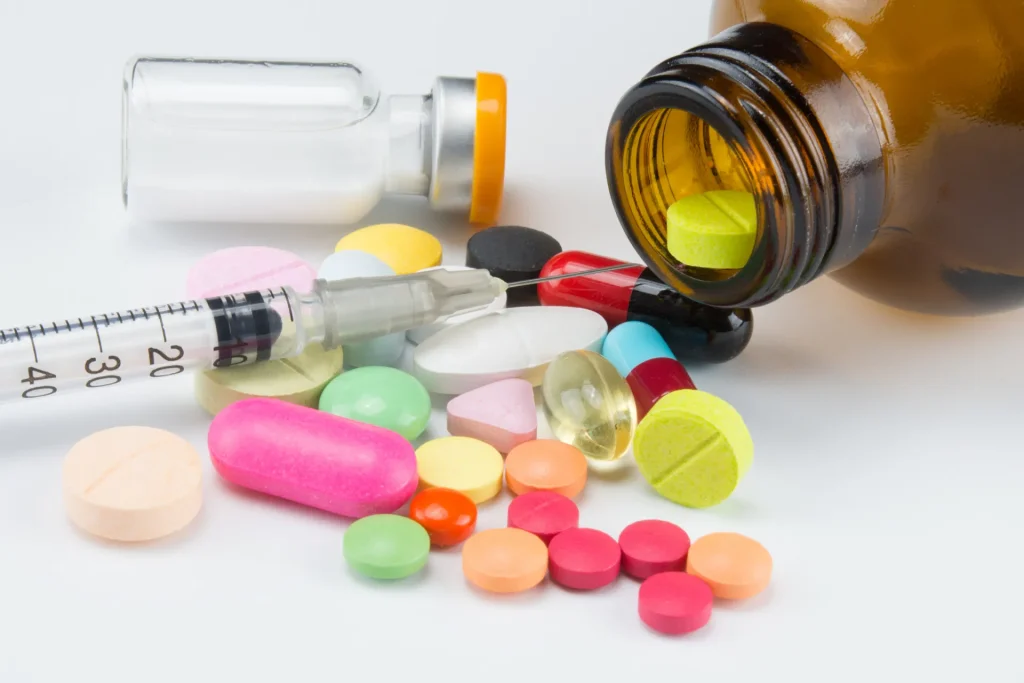
Common Dry Grinding Technologies in Pharmaceuticals
Dry submicron powder preparation mainly achieves ultrafine particle size reduction through mechanical force, jet impact, or low-temperature embrittlement. Common methods include:
1. Jet Milling
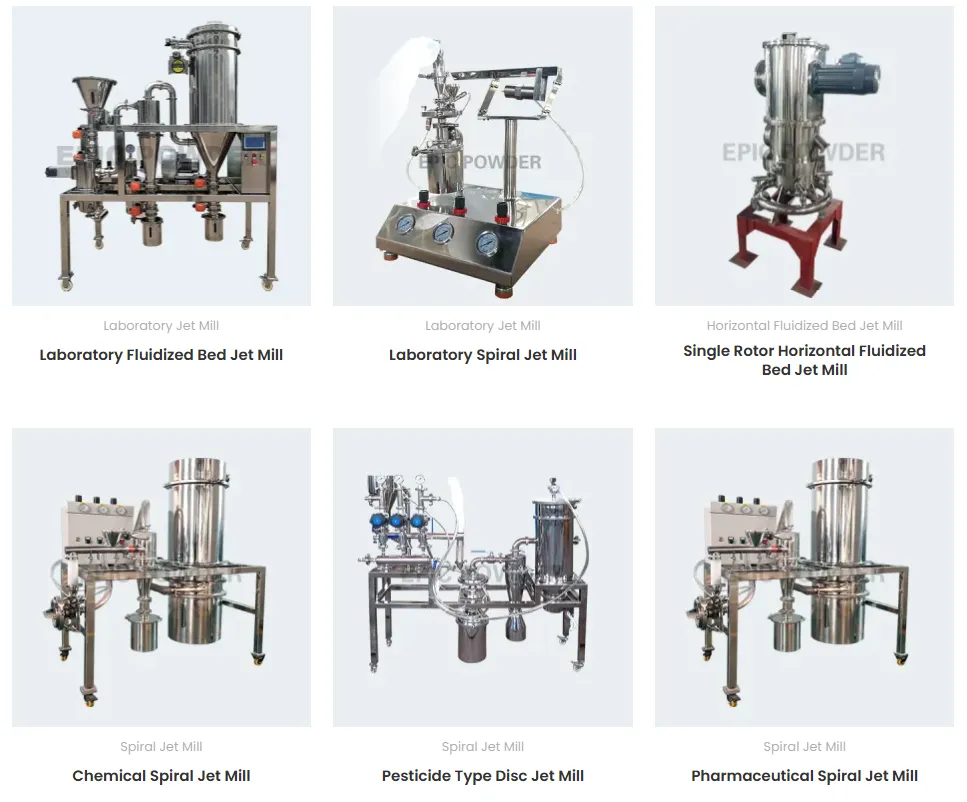
Utilizes high-speed jet to induce particle collision and shear, producing submicron particles with narrow size distribution and regular morphology.
2. Mechanical Grinding (e.g., Ball Milling, Vibratory Milling)
Suitable for low-hardness or heat-sensitive materials, often combined with inert gas protection to prevent oxidation or degradation.
3. Cryogenic Grinding
Conducted in low-temperature environments (e.g., liquid nitrogen) to effectively suppress thermal decomposition of heat-sensitive drugs while enhancing material brittleness for finer grinding.
4. Spray Drying Combined with Dry Grinding
First forms microparticles via spray drying, followed by dry grinding to achieve submicron structures.
A common advantage of these technologies is the elimination of liquid media, thereby avoiding subsequent drying and solvent recovery steps—making them particularly suitable for GMP-compliant pharmaceutical production.
Core Advantages in Pharmaceutical Applications
Dry submicron powder preparation refers to the process of reducing drugs or excipients to a particle size range of 0.1–1 μm without liquid phase involvement. In recent years, this technology has rapidly developed in the pharmaceutical field, demonstrating multidimensional technical and application advantages over traditional wet or conventional grinding processes. Below, we outline its key benefits in pharmaceutical formulation development and production:
1. Elimination of Solvent Residues, Ensuring Drug Safety
The entirely solvent-free process avoids risks associated with residues of ethanol, acetone, or water, complying with international standards such as ICH Q3C.
Maximizes chemical and crystalline stability for hydrolytically sensitive, oxidizable, or thermally unstable APIs (e.g., peptides, proteins, certain antibiotics).
Main Applications: Micronization of high-potency drugs such as hormones, cytotoxic agents, and biomolecule precursors.
2. Enhanced Dissolution Performance and Bioavailability of Poorly Soluble Drugs
Submicron particles (especially <1 μm) significantly increase the surface area per unit mass, accelerating contact with gastrointestinal fluids and improving dissolution rates.
Clinical studies show that dry submicronization can reduce time to peak concentration (Tmax) by 30–50% and increase bioavailability by 2–3 times for both traditional Chinese medicine and synthetic drugs (e.g., fenofibrate, curcumin).
Main Applications: Bioavailability of ultrafine traditional Chinese medicine powders generally exceeds 90% (Introduction to Ultrafine Powders, June 2025).
3. Green and Efficient Process, Aligning with GMP and Sustainability Goals
Eliminates steps such as dissolution, emulsification, spray drying, and solvent recovery required in wet granulation, shortening production cycles.
Reduces energy consumption and achieves zero wastewater discharge; technologies like jet milling and dry granulation consume over 30% less energy than wet methods, with no waste gas or wastewater emissions—embodying the “Green Pharmacy” concept.
Dry processing equipment (e.g., roller compactors, closed-loop jet mills) is better suited for continuous manufacturing, enhancing production flexibility and efficiency.
Main Applications: Dry granulation is widely used in solid dosage forms for moisture- and heat-sensitive drugs (e.g., aspirin, vitamin C) (Baidu Encyclopedia, 2025).
4. Improved Powder Flowability and Formulation Uniformity
Modern dry processing equipment (e.g., classified jet mills) enables narrow particle size distributions (D90/D10 < 1.8), reducing fine powder dispersion and coarse particle sedimentation.
Enhanced interfacial interactions between submicron APIs and excipients facilitate stable blending, particularly beneficial for low-dose, high-potency drugs (e.g., ≤1 mg/tablet) to ensure content uniformity.
Supports direct compression, as optimized dry powders exhibit excellent compressibility and flowability, enabling formulations with “less excipient, higher drug loading.”
5. Expansion into Novel Drug Delivery Routes and Dosage Forms
Dry processing allows precise control of aerodynamic particle size (1–5 μm), enabling efficient lung deposition—a core technique for dry powder inhalers.
For orally disintegrating films or tablets, the rapid wetting and dispersion properties of submicron powders enhance oral mucosal absorption efficiency.
Separate micronization of different APIs via dry methods avoids interactions (e.g., acid-base reactions, crystalline transformations) that may occur in wet processes.
6. Preservation of Active Ingredients in Natural Medicines
Cryogenic dry grinding (e.g., –50°C ultra-low-temperature jet milling) effectively protects heat-sensitive active peptides and enzymes in animal-derived medicines like deer antler and cordyceps.
Cell wall disruption through ultrafine grinding achieves a cell breakage rate >95%, enabling more complete release of active ingredients and overcoming the efficiency limitations of traditional decoction extraction methods.
Main Applications: After adopting micronization technology, Tongxinluo Capsules demonstrated significantly improved release rates of active components, allowing reduced dosage while maintaining efficacy (Data from November 2024).
Dry submicron powder preparation technology has emerged as a critical enabler for modern high-end pharmaceutical formulations, thanks to its high safety, efficiency, broad applicability, and green sustainability. As powder engineering, process analytical technology (PAT), and intelligent manufacturing continue to integrate, its potential in personalized medicine, complex formulations, and the globalization of traditional Chinese medicine will further expand.

Epic Powder
EPIC POWDER focuses on the R&D of ultra-fine and ultra-pure pulverization and classification of calcium carbonate, powder shape control and selective pulverization, powder surface modification, and powder industry solutions. We have independently researched and developed grinding mills and air classifiers that are widely used in the production of ultrafine powders from non-metallic minerals such as calcium carbonate, talc, and marble. These innovations have significantly contributed to technological progress and industrial upgrading in the mineral and new materials sectors.
“Thanks for reading. I hope my article helps. Please leave a comment down below. You may also contact EPIC Powder online customer representative Zelda for any further inquiries.
— Emily Chen, Senior Engineer