
Zirconia as an Advanced Ceramic
Zirconia is widely recognized as a premier advanced ceramic material due to its excellent mechanical strength, fracture toughness, and thermal stability. Achieving these superior properties requires precise control over sinterability and microstructure during production. The sintering process depends heavily on the initial characteristics of the zirconia powder, making the particle size and distribution crucial factors. Properly classified zirconia powder ensures uniform densification while preventing defects such as abnormal grain growth and residual porosity. Thus, controlling powder quality is fundamental to unlocking the full potential of zirconia ceramics in demanding applications. By acting as an adaptable gatekeeper, the classifier wheel maintains the consistent particle size distribution (PSD) essential for high-quality zirconia powder.
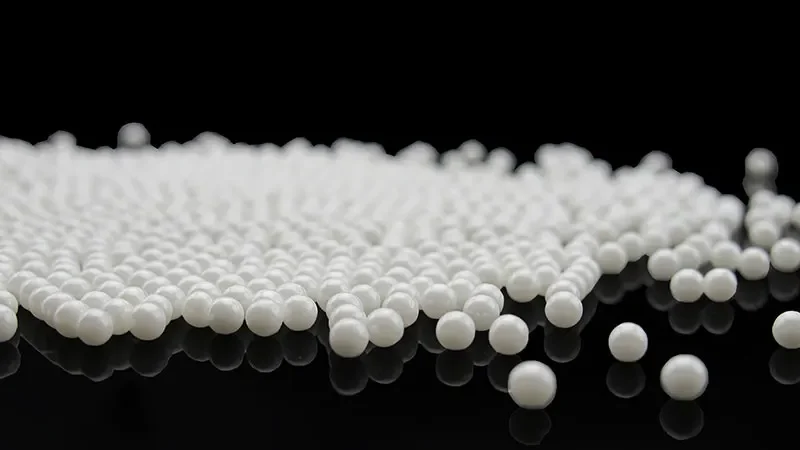
How Particle Size Distribution Directly Impacts Final Ceramic Properties
The particle size distribution (PSD) of zirconia powder plays a decisive role in determining the properties of the finished ceramic parts. A narrow and well-defined PSD improves packing density, leading to higher green density compacts before sintering. This directly translates to enhanced sinterability, resulting in uniform grain growth and optimized mechanical properties such as strength, hardness, and toughness. Conversely, broad or inconsistent PSD can cause uneven shrinkage, increased porosity, and ultimately reduce reliability and durability. For these reasons, precision-classified zirconia powder with an optimized PSD is essential for achieving ideal ceramic performance in critical industries worldwide.
The Performance Advantages of Precisely-Classified Zirconia Powder
Achieving High Density and Uniform Grain Growth
When zirconia powder is precisely classified, it significantly improves sinterability. A narrow particle size distribution (PSD) allows particles to pack more densely, reducing porosity during sintering. This leads to higher density in the final ceramic parts, which enhances mechanical strength and durability. Additionally, uniform particle sizes promote consistent grain growth, preventing abnormal grain enlargement that can weaken the structure. With precise classification, manufacturers can reliably produce zirconia ceramics that meet strict performance standards.
Improved Reliability and Consistency in Final Components
Consistency is key in high-performance ceramics, and precisely controlled zirconia powder particle size directly translates to reliable final components. By maintaining tight control over particle sizes, the sintering behavior becomes predictable, minimizing variations between production batches. This consistency ensures that every component delivers the expected mechanical, thermal, and electrical properties, which is critical for industries relying on zirconia ceramics—from medical implants to automotive parts.
Enabling Advanced Forming Processes: From Pressing to Additive Manufacturing
Precisely classified zirconia powder opens the door to diverse and advanced forming techniques. Whether using traditional pressing methods or cutting-edge additive manufacturing, uniform particle size distribution improves powder flowability and packing density. This results in better mold filling and fewer defects in green and sintered parts. The ability to fine-tune particle size through the classifier wheel supports innovative approaches, helping manufacturers optimize production efficiency and component performance. For example, exploring technologies like zirconia jet mill production lines can expand process capabilities at scale.
Why the Classifier Wheel is Indispensable
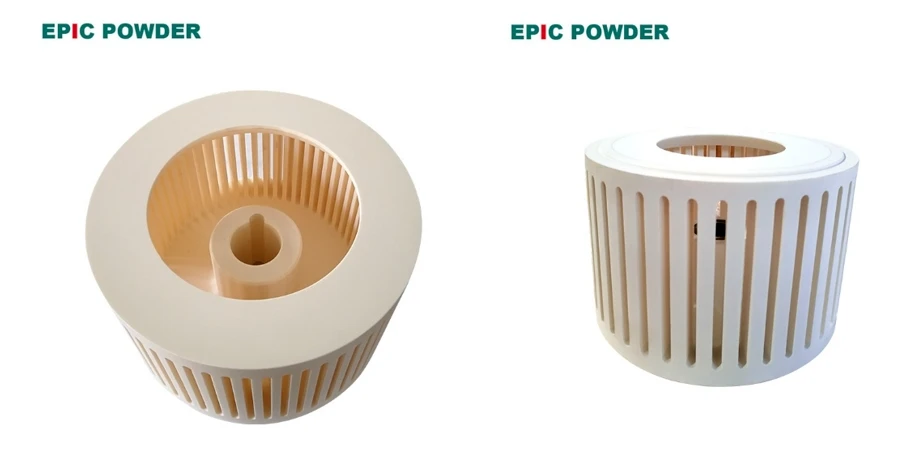
How the Classifier Wheel Acts as a Dynamic Quality Gate
The classifier wheel is the heart of zirconia powder processing. Think of it as a dynamic quality gate that constantly sorts particles based on size. Unlike static screens or filters, the classifier wheel uses centrifugal force to separate fine zirconia powders from coarser ones in real time. This continuous sorting ensures only particles meeting strict size criteria pass through, eliminating oversized grains that can weaken ceramic performance. By acting as an adaptable gatekeeper, the classifier wheel maintains the consistent particle size distribution (PSD) essential for high-quality zirconia powder.
The Speed-Size Relationship: Direct Command Over the Cut Point (D97)
One of the key features of the classifier wheel is how its rotational speed directly controls the powder’s cut point, commonly known as D97 — the particle size below which 97% of particles fall. By adjusting the speed precisely, operators can fine-tune the classifier to target the ideal particle size range for optimal sintering behavior. Faster wheel speeds generally lead to finer cut points by rejecting larger particles faster, while slower speeds allow more coarse particles to pass. This direct link between classifier speed and particle size enables tight control over final zirconia powder characteristics.
Delivering Narrow PSD: The Foundation for Predictable Sintering
A narrow particle size distribution is critical when producing zirconia powders that sinter predictably and uniformly. The classifier wheel’s precise sorting creates a consistent and narrow PSD, minimizing variation in particle packing density and sintering behavior. Uniform particle size helps prevent defects such as abnormal grain growth or porosity in the final ceramic component. This foundation of predictable sintering leads to stronger, more reliable zirconia parts with better microstructural control, directly impacting performance in demanding applications. For advanced ceramics, this level of PSD control is non-negotiable.
For similar precision classification challenges, solutions like the high-precision MQW series classifier mills featured in cases such as ultra-fine activated carbon grinding illustrate how dynamic classification enhances powder quality and consistency, reinforcing why the classifier wheel remains crucial in zirconia powder production.
Precision Classification with the MQW60 System for Zirconia
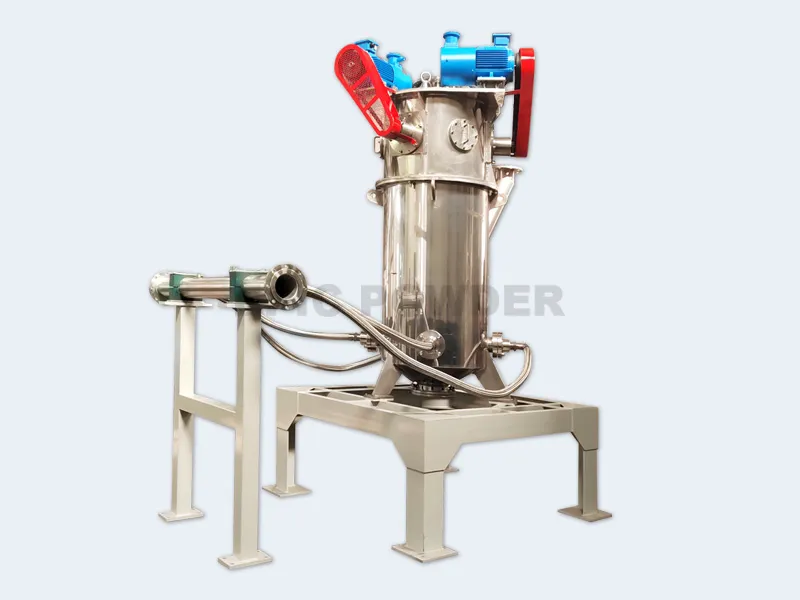
The Robust, High-Precision Classifier of the Epic Powder MQW60
The Epic Powder MQW60 system stands out as a durable and highly precise classifier wheel designed specifically for zirconia powder. Its robust engineering ensures contamination-free processing, crucial for maintaining the purity of advanced ceramics. The MQW60’s dynamic control capabilities allow it to finely separate particles by size, targeting an ideal zirconia powder particle size distribution that meets stringent industrial requirements. This classifier wheel is built to handle continuous production without sacrificing accuracy, making it a vital tool in achieving consistent powder quality.
How Precise Speed Control Achieves Target D50 and D97
One of the core strengths of the MQW60 system is its exact speed control, which directly influences the cut points defined by D50 (median particle diameter) and D97 (finer particle size threshold). By adjusting the rotational speed of the classifier wheel, operators gain complete command over the particle size distribution (PSD), ensuring a narrow and predictable range. This precision translates directly into enhanced sinterability and improved microstructure control in zirconia ceramics, meeting the demands for performance-grade powders needed for advanced forming techniques.
Maintaining High-Volume Output with Ceramic-Grade Quality
The MQW60 not only excels in precision but also scales effectively for production environments requiring high throughput. Whether producing small batches for R&D or full-scale ceramic components, the system maintains consistent classification quality throughout. Its design supports high-volume output without changes in contamination or PSD, enabling manufacturers to meet commercial demands without compromising on the ideal zirconia powder particle size. For companies looking to optimize advanced ceramic manufacturing, the MQW60 offers the balance of speed, accuracy, and product purity necessary for long-term success.
For further insights into ceramic powder production lines and milling solutions, consider exploring the proven capabilities of the Epic Powder MQW jet mill system designed for consistent fine particle control.
Technical Parameters and Process Optimization for Zirconia
The Dominant Lever: Why Classifier Speed is Paramount for Final Zirconia Size
Classifier speed is the single most effective control for defining the final particle size distribution (PSD) of zirconia powder. Adjusting the speed directly changes the cut point (often expressed as D97), which determines the largest particle size allowed to pass. Faster speeds produce finer powder by pushing coarser particles to continue grinding, while slower speeds allow larger particles through.
Key points:
Speed controls cut point (D97) precisely
Simple adjustments provide immediate PSD changes
Critical for maintaining narrow particle size distribution for ideal sintering
Integrating Classifier Speed with Grinding Energy Input
Classifier speed alone isn’t the full story. Coordinating it with grinding parameters—like mill energy input and media size—ensures stable and consistent results. This synergy balances powder size, grinding efficiency, and equipment wear.
| Parameter | Effect on Zirconia Size and Quality | Optimization Notes |
|---|---|---|
| Classifier Speed | Directly controls cut point & PSD | Adjust for target D50 & D97 |
| Grinding Energy | Breaks particles down to target size | Tune to avoid overgrinding or excessive media wear |
| Media Size | Assists in achieving uniform size reduction | Select based on final particle size goals |
Optimization for Advanced Ceramics
Finding the sweet spot between production throughput, powder fineness, and media lifespan is crucial for cost-effective zirconia powder manufacturing.
- Throughput should meet production quotas without sacrificing quality.
- Fineness is vital for enhancing sinterability and final ceramic performance.
- Media wear impacts contamination risk and maintenance; selection depends on the material and processing parameters.
Process optimization means continuous monitoring and fine-tuning of classifier speed alongside grinding conditions to ensure the best combination of yield, powder quality, and operational cost.
For real-world applications, our advanced systems complement jet milling techniques like those used in ultra-fine grinding of silica SiO₂, ensuring consistent high-grade zirconia powder production.
The Epic Powder Advantage

Engineered for Durability and Purity: Contamination-Free Design for Ceramic Powders
Epic Powder’s classifier wheels are built specifically with advanced ceramics like zirconia in mind. The design ensures contamination-free processing, using wear-resistant materials and precision seals that prevent foreign particles from mixing with your powder. This protects the purity of your zirconia powder, which is essential for achieving the ideal particle size distribution required for top-tier sinterability and microstructure control. With durability at its core, our systems maintain consistent performance over time, reducing downtime and costly maintenance.
From Lab to Production: Scalable Precision with Proven Ceramic Milling Expertise
Our expertise extends from small-scale labs to full production lines, ensuring that the precision classification of zirconia powder scales seamlessly as your demand grows. Epic Powder’s equipment, like the MQW60 classifier wheel system, offers adjustable speed controls and robust design to deliver consistent particle size targets such as D50 and D97. Whether you’re developing experimental batches or running high-volume manufacturing, our technology reliably maintains narrow particle size distribution for predictable sintering and reliable ceramic properties. For concrete examples of scalable precision, see how similar advanced ceramics have been processed in dedicated milling production lines like the dental ceramics grinding production line in Vietnam.
Partnership Approach
We don’t just supply equipment; we work closely with you to develop a ceramic-specific speed profile tailored to your zirconia powder’s unique characteristics and production goals. This collaborative approach ensures the classifier wheel settings—especially speed—are optimized to balance throughput, fineness, and media wear, ensuring the best particle size distribution for your application. Our commitment is to help you achieve consistent, ideal powder grades by fine-tuning the cutting point with precision. This partnership-driven process is critical when targeting sub-micron sizes and narrow PSDs essential for high-performance zirconia ceramics.
Common Questions on Zirconia Powder Classification (Q&A)
How Does a Classifier Wheel Ensure Better Performance Than Simple Screening for Zirconia?
The classifier wheel offers precision that simple screening just can’t match when it comes to zirconia powder particle size. Here’s why it outperforms basic screening:
- Dynamic Sorting: Unlike static screens, the classifier wheel continuously adjusts its speed to control the cut point, offering tight particle size distribution (PSD).
- Higher Precision: It targets and rejects oversized particles at a specific D97 cut point, ensuring only the ideal particle sizes pass through.
- Narrower PSD: This control results in predictable sintering and better final ceramic properties.
- Less Contamination: Since it doesn’t rely on mesh screens, there’s reduced risk of clogging and contamination.
In simple terms, the classifier wheel acts as a high-precision gatekeeper, delivering consistent, high-quality zirconia powder that supports advanced ceramic manufacturing.
How to Consistently Achieve and Maintain Sub-Micron Specifications at Production Scale?
Maintaining sub-micron particle sizes in zirconia powder at large scale demands tight process controls and the right equipment. Here’s a quick guide:
| Key Factor | Best Practice |
|---|---|
| Classifier Wheel Speed | Fine-tune speed to hit target D50 and D97 values precisely. |
| Grinding Energy Input | Balance energy input to avoid over or under grinding. |
| Process Monitoring | Use real-time particle size analyses and adjust classifier parameters accordingly. |
| Equipment Maintenance | Keep classifiers and mills clean and well-calibrated to prevent drift. |
| Material Handling | Minimize contamination with contamination-free classifier designs. |
By mastering speed control on the classifier wheel—like the Epic Powder MQW60 offers—and integrating it with optimized grinding steps, you can reliably produce high-volume zirconia powder meeting tight sub-micron specs. For example, precision classification techniques similar to those in advanced milling lines for other high-purity powders have been proven to sustain quality and scale successfully.
Keeping these factors in check allows manufacturers to achieve consistent, repeatable results that meet the strict demands of advanced ceramic applications.
Epic Powder
At Epic Powder, we offer a wide range of equipment models and tailor solutions to meet your specific needs. Our team has more than 20 years experience in various powders processing. Epic Powder is specialized in fine powder processing technology for mineral industry, chemical industry, food industry, pharama industry, etc.
Contact us today for a free consultation and customized solutions!

“Thanks for reading. I hope my article helps. Please leave a comment down below. You may also contact EPIC Powder online customer representative Zelda for any further inquiries.”
— Jason Wong, Volunteer