
As the first large-scale deployments of Lithium Iron Phosphate (LFP) batteries enter their end-of-life phase, spent LFP is rapidly unlocking its strategic value. For recyclers, one critical metric directly determines final profitability: the purity and particle size of the recovered black mass. This single factor dictates whether the output can be purchased by leading battery manufacturers, ultimately deciding if the profit is $1,000 or $4,000 per ton. Not all black mass is profitable. Only high-purity material translates to real revenue. So, how is high-purity black mass prepared?
I. What Exactly is High-Purity Black Mass?
High-purity powder mass primarily refers to reclaimed cathode active material powder with extremely low impurity levels. Its preparation involves a series of steps: disassembly of spent LFP batteries, separation, and purification. Through physical, chemical, or thermal treatment methods, impurities are removed to obtain high-grade powder.
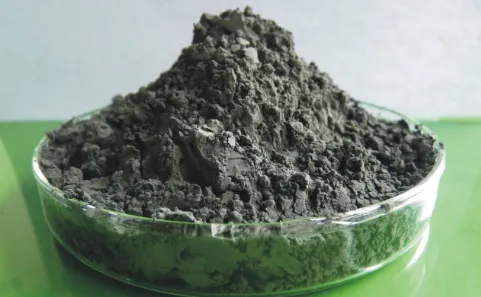
Key Specifications:
① Chemical Composition: Highly consistent with virgin LiFePO₄, with purity ≥ 99.5%
② Ultra-Low Impurities: Total metallic impurities ≤ 500 ppm (Cu, Al, Fe, Ni, Cr, etc.)
③ Controlled Particle Size Distribution: D50 = 1–3 μm, Span < 1.2
④ Direct Usability: Suitable for direct use in synthesizing regenerated cathode material.
High-purity black mass offers excellent conductivity and stability in battery materials, granting it significant application value in the manufacturing of new batteries.
II. Why Prepare High-Purity Black Mass?
1. Maximizing Economic Returns
Spent LFP batteries contain valuable metal elements like lithium, iron, and phosphorus. Recycling these materials effectively reduces raw material costs for new battery production, boosting recyclers’ profitability. Preparing high-purity black powder ensures higher quality for subsequent regenerated materials, allowing them to be sold at a premium and further enhancing economic value. The primary goal for LFP recyclers is efficient resource recovery and reuse, coupled with improved economic gains.
2. Meeting Regenerated Material Requirements
Direct regeneration is a promising recycling technology but demands exceptionally high black mass purity. Impurities like copper or aluminum severely compromise the electrochemical performance of regenerated cathodes, leading to reduced battery capacity, shorter cycle life, and even safety risks. Therefore, high-purity black mass is a prerequisite for producing high-quality regenerated LFP cathode material.
3. Environmental Protection
Improper disposal of spent LFP batteries causes environmental pollution. Recycling and purifying black powder helps reduce landfill waste and minimizes contamination of soil and water by heavy metals and toxic substances. For instance, using recovered iron from spent batteries to produce battery-grade iron phosphate precursors addresses solid waste issues while supplying raw materials for new-energy batteries.
4. Strategic Resource Significance
Global lithium resources are limited. Recycling is a crucial pathway for ensuring sustainable industry development. Efficient recovery and preparation of high-purity black powder reintegrate valuable elements like lithium, iron, and phosphorus from spent batteries back into production, alleviating resource scarcity.
5. Reducing Secondary Pollution
Traditional hydrometallurgical recycling processes can cause secondary environmental pollution through wastewater and exhaust emissions. Developing green, efficient processes—such as closed-loop flow systems—can avoid such waste streams while yielding high-purity products. Acid-free leaching routes are also emerging to address corrosion and secondary pollution associated with traditional acid leaching.
Table 1.1 Contaminated materials in LiFePO₄ batteries and potential environmental contamination
| Material | Chemical Properties | Potential Environmental Hazards |
|---|---|---|
| Graphite | Carbon powder dust is prone to explosion when exposed to open flame. | Dust pollution and fire risk |
| Polypropylene, Polyethylene | Reacts with fluorine, strong acids, and strong bases to generate hydrogen fluoride (HF). | Fluorine pollution |
| Polyvinylidene Fluoride (PVDF) | Combustion produces CO₂, aldehydes, etc. | Organic pollution |
| Lithium Hexafluorophosphate (LiPF₆) | Highly corrosive; decomposes in water to generate HF; reacts with strong oxidants; produces P₂O₅ when burned. | Fluorine pollution and alteration of environmental pH |
| Ethylene Carbonate | Reacts with acids, bases, strong oxidants, and reducing agents; hydrolysis products yield aldehydes and acids. | Aldehyde and organic acid pollution |
| Propylene Carbonate | Reacts with water, air, and strong oxidants; decomposes upon heating to produce harmful gases such as aldehydes and ketones; may cause explosion if ignited. | Aldehyde and ketone organic pollution |
| Dimethyl Carbonate | Reacts violently with water, strong oxidants, strong acids, strong bases, and strong reducing agents. | Organic pollution |
III. Detailed Process Flow for Black Mass Preparation
1. Pre-Treatment Stage
① Safe Discharge: Saltwater immersion or dedicated discharge cabinets to reduce voltage to <1V.
② Mechanical Disassembly: Automated shell removal, terminal cutting, and module separation.
③ Electrode Stripping: Pyrolysis (350–450°C) or solvent soaking to soften PVDF binder, facilitating roll-stripping.
④ Pre-Cleaning: Spraying with ethanol/water mixture to remove residual electrolytes (reducing HF generation risk).
2. Multi-Stage Crushing & Liberation
In spent LFP battery recycling, cathode material is firmly bonded to aluminum foil current collectors, forming a composite with conductive carbon and binder (e.g., PVDF). Direct chemical purification is inefficient, costly, and leads to impurity exceeding the standard from metal foil contamination. Thus, multi-stage physical crushing and efficient liberation are essential to fully separate black mass from current collectors while controlling particle size and purity.
① Coarse Grinding: Dual-shaft shredders reduce material to 10–20 mm pieces, cutting electrode sheets into smaller segments. This disrupts cell integrity, enables initial foil detachment, and causes some active material to shed via shear force, reducing volume and enhancing downstream processing efficiency. Spark suppression and dust collection are implemented concurrently for safety.
② Intermediate Grinding: Hammer or roller crushers reduce material to 1–3 mm—a critical window for efficient physical separation of powder and metal foil. This significantly increases liberation efficiency (≥95%), causes PVDF binder to fracture from mechanical fatigue, releases encapsulated active particles, and provides uniform, loose feed for fine crushing. Air classification or screening can pre-remove larger metal fragments. Adding magnetic separation + eddy current separation at this stage recovers >90% of Cu/Al, easing the burden on fine crushing.
③ Pulverization: Jet milling is now standard, using high-speed jet (compressed air or nitrogen) to induce particle collision and friction for size reduction, avoiding mechanical grinding media. This achieves target particle size (D50: 1–3 μm) with a narrow distribution (Span < 1.2). It refines liberated LFP particles to battery-regeneration scale without introducing foreign contaminants (e.g., from zirconia beads in ball milling). The self-cooling effect prevents local overheating and LiFePO₄ decomposition. Built-in dynamic classifiers allow real-time adjustment for precise particle size control. Leading recyclers commonly use nitrogen-recirculation jet mill systems for safety and purity.
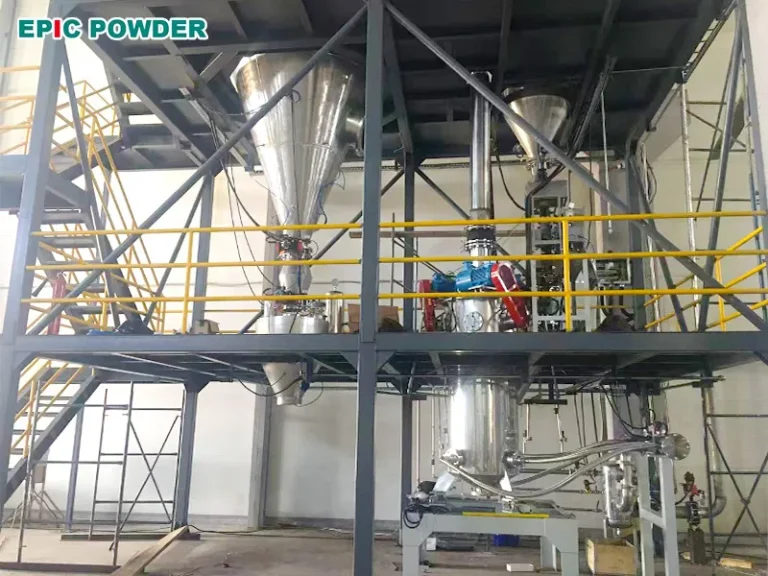
3. Inert Atmosphere Protection
Operating under an inert atmosphere—especially during intermediate and fine crushing—is a critical prerequisite for high-purity black powder.
Standard Practice: Use high-purity nitrogen (>99.999%), maintaining system oxygen levels <50 ppm (some companies require <20 ppm).
Key Benefits: Prevents combustion/explosion, inhibits Fe²⁺ oxidation (ensuring material purity), and reduces equipment oxidation/wear.
Innovation: Some companies pilot nitrogen recovery and reliquefaction systems, cutting nitrogen consumption by over 60%.
4. Multi-Stage Separation & Purification
After multi-stage crushing, the resulting micron-sized powder remains a mixture of components: black powder plus various impurities from battery structures (metal foil fragments, separator residues, conductive agents, binders, etc.). Multi-stage separation is thus the core step for ensuring high purity. It employs combined techniques—based on physical properties like size, density, conductivity, and magnetism—to progressively remove different contaminants.
| Type of Impurity | Separation Technology | Removal Efficiency |
|---|---|---|
| Aluminum/Copper Foil Fragments (>50 μm) | Vibrating Screen + Eddy Current Separation | >99% |
| Fine Metal Particles (<50 μm) | High-Gradient Magnetic Separation + Electrostatic Separation | 85-90% |
| Separator/Plastic Fragments | Air Classification + Flotation | >95% |
| Carbon Black/Conductive Additive | Controlled Crushing Intensity (partial retention to aid subsequent sintering) | Moderately retained (5-8%) |
Preparing high-purity LFP black mass is far from simple grinding. It represents a comprehensive challenge spanning material science, mechanical engineering, and process control. It is both a technical barrier and a profit moat.
Epic Powder
Epic Powder is specialized in fine powder processing technology for mineral industry, chemical industry, food industry, pharama industry, etc. Our team has more than 20 years experience in various powders processing and had ever designed and installed the biggest Jet Mill Line for ultra-fine barite powder production line in China.
We are a professional supplier of powder processing projects, especially powder milling, powder classifying, powder dispersing, powder classifying, powder surface treatment and waste recycling. We supply consultancy, testing, project design, machines, commissioning and training.

Thanks for reading. I hope my article helps. Please leave a comment down below. You may also contact EPIC Powder online customer representative Zelda for any further inquiries.
— Jason Wang, Senior Engineer