
Are you looking for a contamination-free way to achieve ultrafine pigment grinding with precise control? Jet mills use fluid energy grinding, leveraging high-velocity jets to accelerate particles and cause intense collisions that break them down into fine powders. Particle size is one of the crucial indicators for pigments. Generally, pigments are required to have stable physical morphology, uniform particle size, and excellent dispersibility to prevent agglomeration or sedimentation.
Jet Milling for Common Types of Pigments
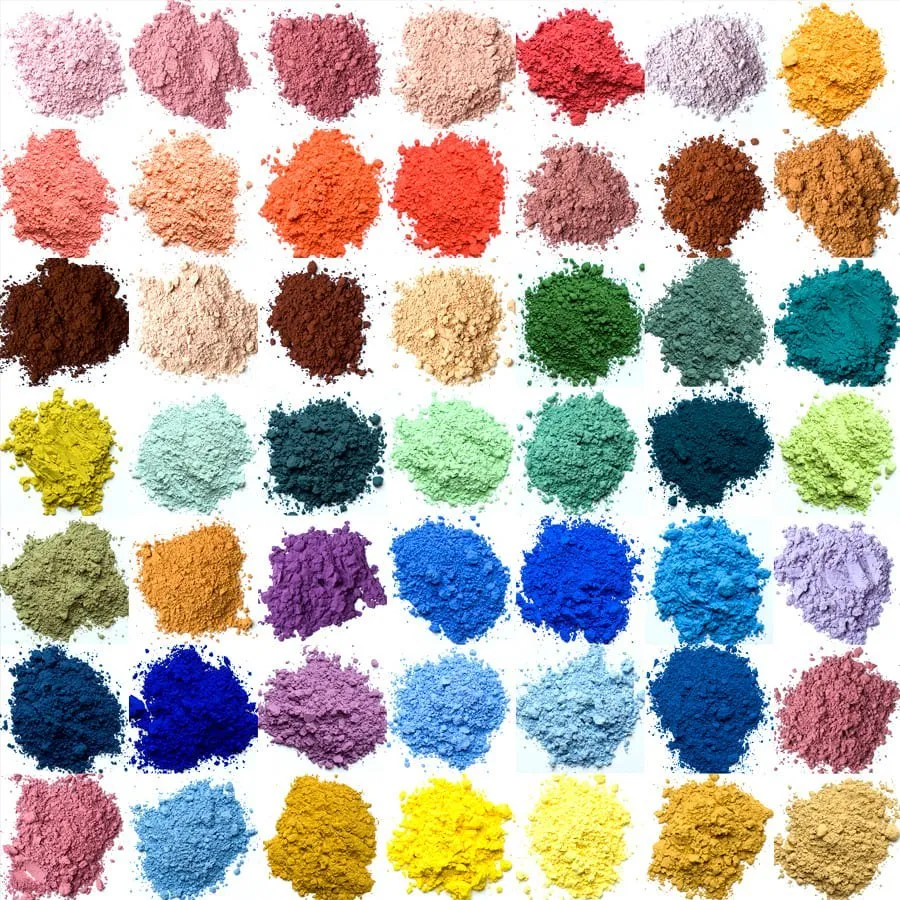
Iron Oxide Pigments
Iron oxide pigments, known for their good dispersibility, excellent lightfastness, and weather resistance, primarily include four coloring pigments based on iron oxides: iron oxide red, iron oxide yellow, iron oxide black, and iron oxide brown, with iron oxide red being the most predominant. While precipitation method (wet process) iron oxide pigments are inherently fine, during processes like filter pressing and drying, microparticles tend to agglomerate into larger aggregates due to van der Waals forces, hydrogen bonding, electrical charges, etc. This makes them unsuitable for direct use in high-end coatings, necessitating ultrafine grinding.
Jet milling, which utilizes the energy of high-speed airflow or superheated steam to achieve ultrafine grinding of solid materials, is one of the most common ultrafine grinding methods. For instance, Yan Bo et al. prepared easily dispersible ultrafine iron oxide pigments using a fluidized bed jet milling system. Under conditions where compressed air met requirements of 0.91-1.32 MPa and 30-60 m³/min, production rates and Hegman fineness achieved were: Iron Oxide Red: 500-900 kg/h, Hegman fineness 5.5-7.0; Iron Oxide Yellow: 300-600 kg/h, Hegman fineness 7.5; Iron Oxide Black: 500-900 kg/h, Hegman fineness 7.0.
Black High-Temperature Manganese Ferrite Pigment
Post surface coating, modification, drying, and crushing, fine particles often re-flocculate into coarse ones, hindering performance. Deep processing with fluidized bed/disc jet mills achieves a Hegman fineness of ~7-7.5, excellent dispersibility, and optimal optical/pigmentary properties.
Brown Ceramic Pigment
As reported by Lv Jinhai et al., using a flat jet mill at 7.5×10⁵ Pa air pressure and 100 kg/h feed rate yielded a product with d₅₀ of 4.55 μm and a maximum particle size of 9.64 μm.
Jet Milling Process Overview
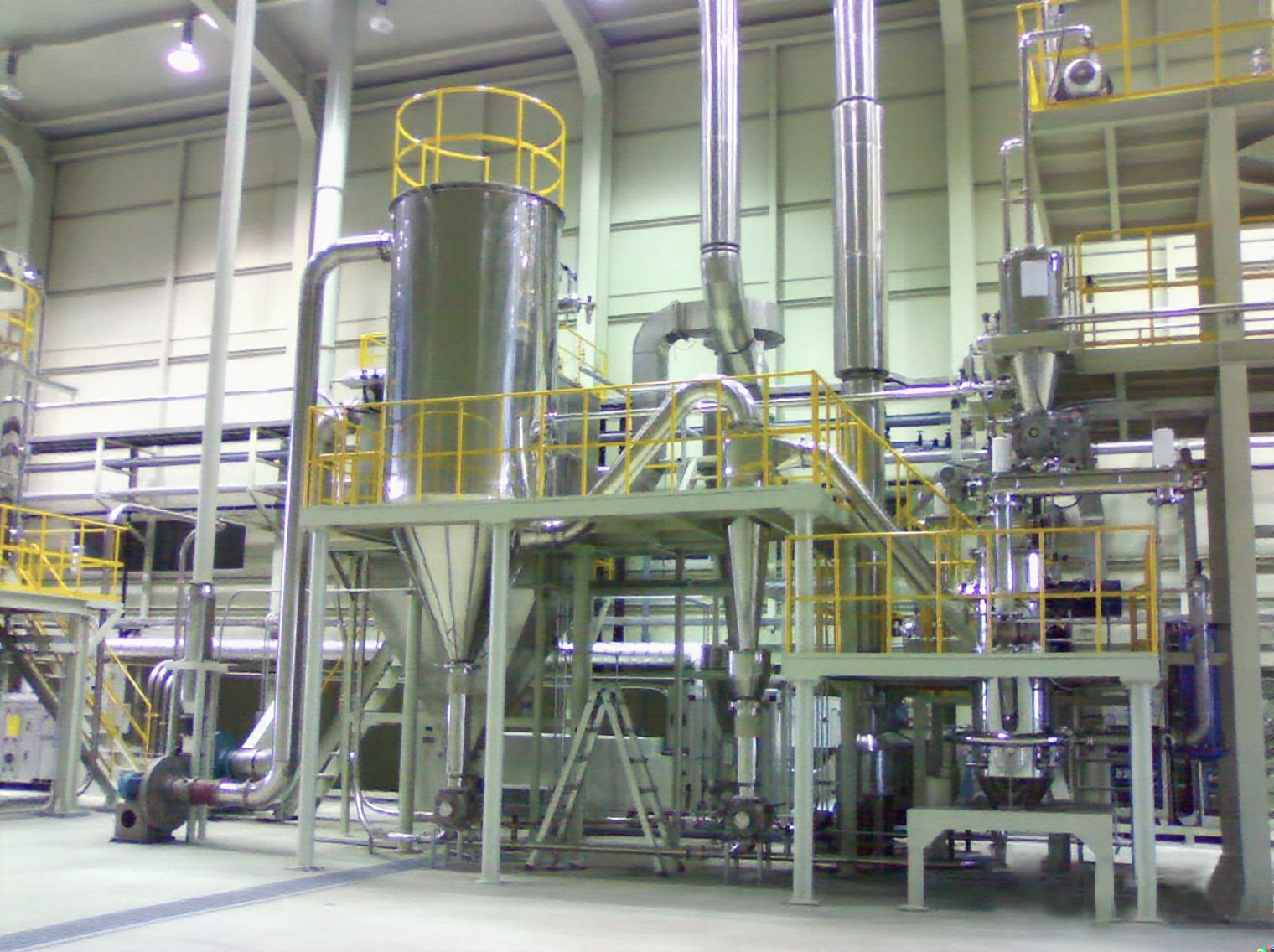
This process primarily consists of a fluidized bed jet mill or disc jet mill, an air compressor system, a feeding system, a mixing system, a dispersant addition device (added as per client requirements), a quantitative feeding device (single or dual feed), a screening system, an iron removal system, a dust collection system, and a packaging system.
Key Control Points for Jet Milling
(1) Eliminate bridging in the hopper. Bridging can create cavities in the raw material above the screw feeder, affecting actual feed rate and thus production. Installing a vibrator can eliminate bridging.
(2) Adjusting working pressure and feed rate can modify product quality to a limited extent.
(3) Pigment color may change after grinding. Higher working pressure and greater air intake per unit time might lead to larger potential color shifts per unit pressure, though no precise rule exists. Note: Grinding primarily aims to achieve the desired fineness and only moderately alter color. It is not recommended to use grinding parameter adjustments for significant color changes.
(4) Typically, the product’s Hegman cleanliness value is lower than its Hegman fineness value. Cleanliness is influenced by the residue content of the raw material. Ultrafine grinding can improve cleanliness but cannot make it equal to fineness.
(5) Production rate is controlled by the screw feeder frequency. Feed quantity relates to the raw material’s vibratory density and the airtightness of the Venturi system. For example, sealing the pressure balancer significantly affects the feed rate for iron oxide yellow but less so for iron oxide black and red. Alternatively, opening the balancer and increasing feed frequency can boost feed rate and production. Currently, sealing the pressure balancer is the adopted practice.
(6) Adjusting working pressure can yield the desired product quality. For iron oxide red, black, and yellow products, increasing working air pressure (other conditions constant) improves fineness. For iron oxide yellow, it also reduces viscosity. However, there’s a limit to fineness improvement via pressure increase; beyond it, further pressure increases offer diminishing returns.
Industrial Applications of Jet-Milled Pigment Powders
Jet-milled pigment powders play a vital role across various industries thanks to their ultrafine particle size and consistent pigment powder fineness. In coatings and paints, especially for automotive, architectural, and industrial finishes, these powders ensure excellent color uniformity, enhanced gloss, and improved durability. Their narrow pigment particle size distribution helps achieve smooth, vibrant surfaces that resist fading and wear.
In plastics and masterbatches, jet-milled pigments provide uniform color dispersion and robust UV protection, essential for product longevity and visual appeal. The micronization of pigments allows for seamless integration into polymers without compromising material properties.
Printing inks benefit significantly from the fine particles produced by jet milling. The precise pigment particle size distribution results in sharp prints and bright, vibrant colors. This is critical for high-quality packaging, labels, and high-resolution graphics.
Cosmetics and personal care products rely on jet-milled pigments for safety, skin feel, and enhanced color performance. The contamination-free milling process guarantees purity, meeting stringent regulatory standards and delivering smooth textures that consumers expect.
Emerging markets are increasingly using jet-milled specialty pigments in electronics, pharmaceuticals, and high-performance materials. These applications demand high-purity pigment powders with specific particle size features that fluidized bed jet mills can provide.
Why Choose Epic Powder for Jet Milling Solutions
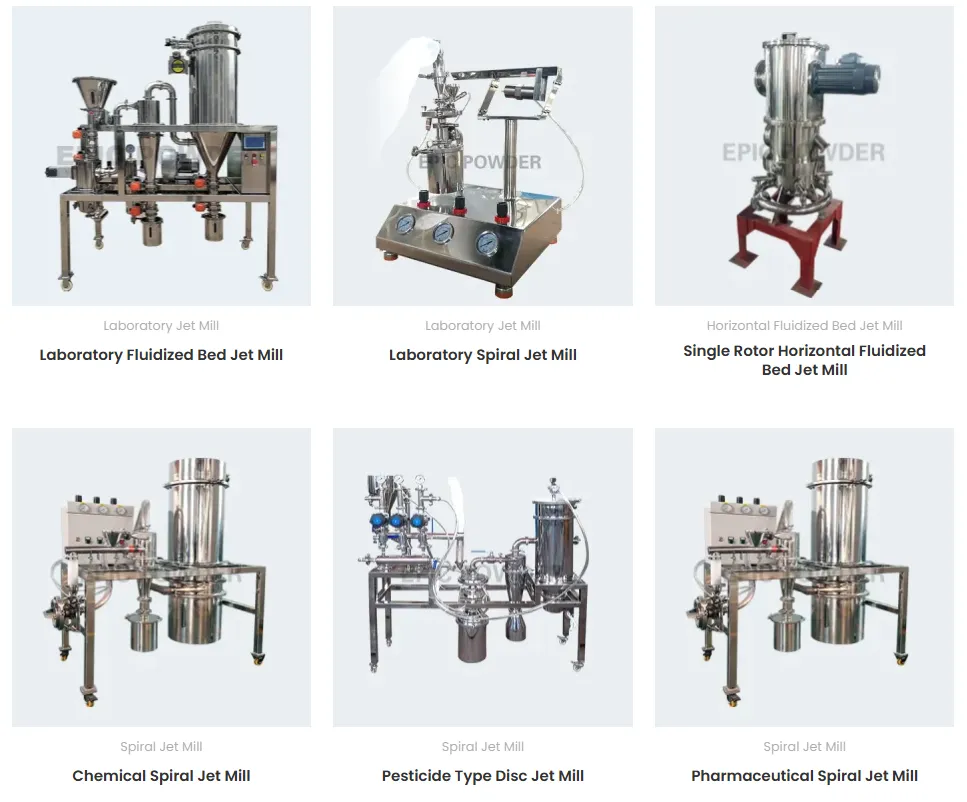
Epic Powder stands out with its MQW series fluidized bed jet mills, designed specifically for pigment powders. These mills deliver a steep pigment particle size distribution (PSD) and achieve micron-level fineness, ideal for ultrafine pigment grinding like titanium dioxide and organic pigments.
Key Benefits of Epic Powder Jet Mills
| Feature | Benefit |
| Steep PSD control | Uniform particle size for consistent pigment dispersion quality |
| Micronization capability | Achieves fine pigment powder for improved color intensity and brightness |
| Fluidized bed technology | High throughput with contamination-free milling |
| Customization options | Tailored solutions for heat-sensitive or moisture-sensitive pigments |
| Technical support | Expert guidance from lab-scale trials to full production |
| Scalability | Easily scaled from small batches to industrial volumes |
| Cost-effective operation | Saves energy while ensuring top pigment powder quality |
Epic Powder’s jet mill solutions minimize contamination risks by avoiding grinding media and use optimized jet control for precision. This results in pure, high-quality pigment powders with excellent dispersibility and stability. Choosing Epic Powder means getting a reliable partner for high-purity pigment production, ensuring your pigment powders meet industrial standards for coatings, plastics, cosmetics, and more.
Epic Powder
Epic Powder is specialized in fine powder processing technology for mineral industry, chemical industry, food industry, pharama industry, etc. Our team has more than 20 years experience in various powders processing and had ever designed and installed the biggest Jet Mill Line for ultra-fine barite powder production line in China. We are a professional supplier of powder processing projects, especially powder milling, powder classifying, powder dispersing, powder classifying, powder surface treatment and waste recycling. We supply consultancy, testing, project design, machines, commissioning and training. Contact us today for your tailored powder solution.

“Thanks for reading. I hope my article helps. Please leave a comment down below. You may also contact EPIC Powder online customer representative Zelda for any further inquiries.”
— Jason Wang, Senior Engineer