
Are you considering buying a jet mill and want to turn that interest into a solid, actionable plan? This article gives you a clear, practical checklist and realistic timeline so you can move from thinking about it to ready to order with confidence.
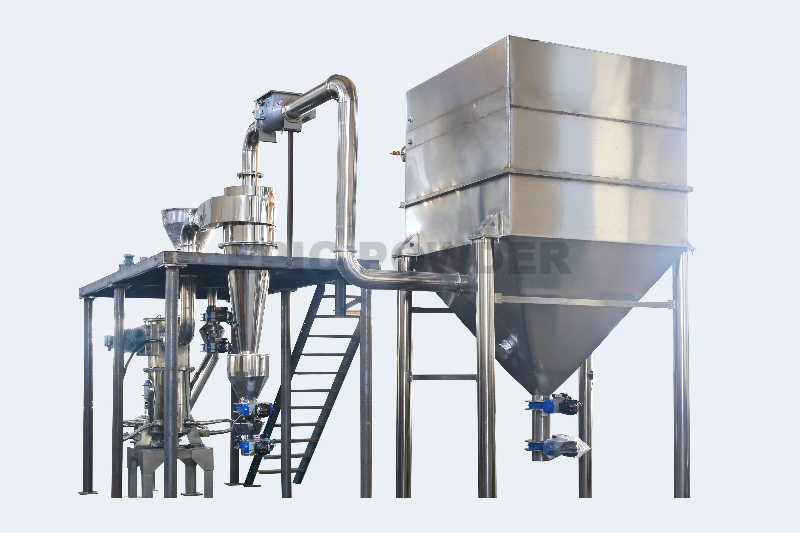
Are You Ready for a Jet Mill?
Before requesting quotations, you need to confirm whether jet milling truly fits your material, quality, and production targets. Jet mills are most valuable when you need ultra-fine, contamination‑controlled, and tightly distributed powders.
1. What materials will you process?
Start by defining the industry and material type you plan to handle, because this drives design, compliance, and cleaning requirements.
- Chemical materials: Pigments, battery materials, catalysts, and specialty chemicals often need very fine particle sizes and strict control of contamination, which suits jet mills well.
- Pharmaceutical powders: APIs and inhalation products frequently require extremely fine and narrow particle size distributions, while meeting GMP and validation standards.
- Food and nutraceuticals: Ingredients like spices, vitamins, and functional powders may demand low-temperature grinding and food‑grade contact materials.
If your powder is hard, abrasive, heat‑sensitive, or must be very pure (low metal contamination), jet milling is usually a strong candidate.
2. What target particle size do you need?
Jet mills are typically chosen when you need sub‑tens‑of‑micron fineness with strict control over the distribution.
Jet mills can help you define numeric targets such as D50 and D97 rather than vague terms like “fine” or “ultra‑fine”. They can decide how narrow your distribution must be, because a tighter curve often means more energy, more precise classification, and higher equipment costs. Jet mills can also clarify any downstream requirements, such as dissolution rate, flowability, or dispersion performance, that depend on particle size.
The clearer your particle size targets, the easier it is to select the right jet mill type, classifier design, and operating conditions.
3. What is your required output?
Your required throughput directly affects equipment size, system configuration, and capital investment.
Estimate your required capacity in kg/h or t/h, based on actual production demand and planned operating hours per day. Consider both average and peak demand, especially if your process is batch-based or seasonal. Decide whether you need a single production line or multiple lines for redundancy or different products.
Under‑estimating capacity can limit growth, while over‑sizing the system can lock you into unnecessary cost and energy consumption.
4. Do you need inert gas or special materials?
Safety and product quality requirements often determine whether you need a standard system or a more specialized configuration. If your powder is flammable, oxidizes easily, or presents explosion risks, you may need nitrogen or another inert gas system. Corrosive or highly pure products may require stainless steel, special alloys, or coatings to prevent contamination or corrosion. If you process multiple products, you may need easy‑clean designs, CIP options, or quick disassembly features.
Clarifying these points early prevents costly redesigns and ensures that the proposed system passes safety and quality audits.
5. What is your space and utility availability?
Even a perfectly sized jet mill will fail operationally if your plant cannot support it physically and logistically.
Measure available floor space and ceiling height, including allowance for feeders, filters, cyclones, platforms, and maintenance access. Confirm compressed air or nitrogen supply, power capacity, and any cooling or vacuum requirements. Consider material flow, operator access, dust control, and room classification (e.g., cleanroom or containment).
Understanding these constraints helps suppliers tailor system layouts that can be installed and maintained smoothly in your existing plant.
What Information Should You Prepare Before Contacting a Supplier?
You will get faster, more accurate quotations if you prepare a clear package of technical and site information. This also shows suppliers that you are serious and ready to move.

1. Prepare material samples for testing
Providing real material allows the supplier to run trials and generate data‑driven proposals instead of assumptions. Plan to send around 5–10 kg of your actual product or a close representative sample. Ensure the sample reflects typical production conditions, including moisture content and particle size. Label each sample clearly with material name, safety information, and handling precautions.
If a supplier (such as Epic Powder) offers free test grinding and detailed reports, use this opportunity to verify feasibility and expected performance before investing.
2. Define key specifications
Concise, well‑structured specifications help engineers quickly determine if a jet mill can meet your requirements.
- Target fineness: Provide D10, D50, and D90 or D97 values, along with current feed particle size.
- Capacity: State your required throughput and whether it is continuous or batch.
- Special requirements: Note any temperature limits, sensitivity to shearing, contamination limits, or regulatory constraints.
With this information, a supplier can select the right machine size, classifier design, and operating conditions and give you realistic performance estimates.
3. Share site and layout details
System design depends not only on the powder but also on the physical environment where the mill will operate.
- Floor space: Provide a simple sketch or drawing showing available footprint and nearby equipment.
- Ceiling height: Jet mill systems often include vertical components such as cyclones, bag filters, and piping that need sufficient headroom.
- Utilities and access: Indicate the locations of compressed air, power, and any existing process connections, as well as access for installation and maintenance.
The more accurate your site information, the fewer surprises you will encounter during installation and commissioning.
Who Should Be Involved in the Decision?
Jet mill projects cut across technical, operational, and financial functions. Bringing the right people in early reduces delays and misalignment.
1. Process engineers and R&D
These team members define “what good looks like” from a technical perspective.
- They establish the required particle size distribution, throughput, and quality attributes.
- They work with suppliers to interpret test results and adjust specifications as needed.
- They also help ensure that the jet mill process can be scaled from lab to pilot to full production.
Their input is essential to avoid purchasing a system that cannot meet real product performance needs.
2. Production managers
Production teams know the realities of day‑to‑day operations and can flag practical constraints early.
- They assess how the jet mill will integrate into existing lines, shifts, and material handling systems.
- They highlight requirements for uptime, maintainability, and operator workload.
- They also help plan production trials and ramp‑up schedules.
Involving production early avoids bottlenecks, unrealistic expectations, and later resistance to new equipment.
3. Procurement and finance
Even the best technical solution must align with budget and commercial strategy.
- Procurement coordinates quotations, negotiates terms, and manages supplier relationships.
- Finance evaluates total cost of ownership, including investment, utilities, maintenance, and lifecycle costs.
- Together, they structure payment terms and approval steps to match internal policies.
Early engagement from these functions helps you build a realistic business case and keep the project moving once a preferred solution is identified.
4. Facility and utility managers
These stakeholders ensure that the plant infrastructure can support the new equipment reliably and safely.
- They confirm that compressed air, nitrogen, and power supplies are adequate and stable.
- They review ventilation, dust collection, and explosion protection needs.
- They coordinate any construction work, such as foundations, platforms, or ducting.
Their involvement is critical for avoiding late‑stage surprises that could delay installation or increase costs.
What Does a Realistic Jet Mill Timeline Look Like?
Understanding the typical phases of a jet mill project helps you set expectations and plan internal activities.
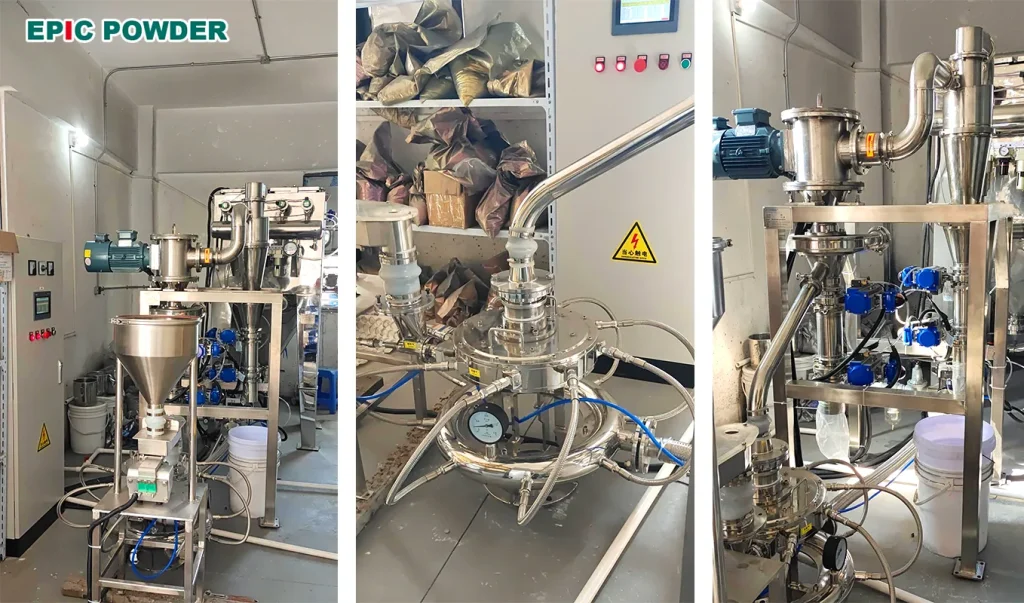
Phase 1: Inquiry and feasibility (1–2 weeks)
This is where you move from concept to confirmed feasibility.
- You provide basic data, send samples, and discuss your goals with the supplier.
- The supplier runs initial tests (if applicable) and indicates whether jet milling can meet your targets.
- You receive preliminary feedback on achievable fineness, capacity, and potential limitations.
If feasibility looks positive, you proceed to more detailed engineering and commercial discussions.
Phase 2: Quotation and planning (2–3 weeks)
At this stage, you are working toward a concrete, customized solution.
- The supplier designs a system tailored to your capacity, space, and safety requirements.
- You receive a technical proposal with equipment configuration, utilities, and performance guarantees where possible.
- A commercial quotation is prepared, including pricing, delivery time, and warranty terms.
During this phase, you should clarify all open questions to avoid scope gaps that could cause problems later.
Phase 3: Approval and order placement (1–4 weeks)
Internal decision‑making can vary widely between organizations, but this phase often dominates the schedule.
- Technical, production, and financial stakeholders review the proposal and align on the preferred option.
- Risk assessments and safety reviews are completed if necessary.
- Once approved, you issue a purchase order and finalize contract documents.
Clear internal communication and defined decision makers help keep this phase within the shorter end of the time range.
Phase 4: Manufacturing and delivery (12–16 weeks)
Once the order is placed, the supplier moves into production.
- Detailed engineering is finalized, and components are manufactured or sourced.
- The jet mill system is assembled, tested, and inspected at the supplier’s facility.
- Logistics are arranged, including packing, shipping, and customs where required.
Complex systems or special materials may extend this phase, so always confirm the current lead time during negotiation.
Phase 5: Installation and commissioning (1–2 weeks)
This final stage takes you from equipment delivery to stable production.
- The supplier’s technicians install and align the equipment, integrate it with your upstream and downstream systems, and check utilities.
- Commissioning runs verify performance, adjust settings, and train operators and maintenance staff.
- Once acceptance criteria are met, the system transitions into routine operation.
Good preparation during earlier phases makes this step smoother and helps you start production on schedule.
How to Minimize Delays and Keep the Project Smooth
Even with a clear timeline, projects can slip if you are not proactive. A few disciplined actions can greatly reduce risk and downtime.
1. Prepare samples and specifications early
Avoid waiting until you talk to suppliers to collect basic data.
- Gather particle size information, capacity requirements, and safety data sheets in advance.
- Identify which products will be milled first and which might come later.
- Prepare and package test samples ahead of time, so you can ship them immediately once discussions begin.
This minimizes back‑and‑forth and allows feasibility testing to start as soon as possible.
2. Clarify utility requirements and availability
Utility issues are a common hidden cause of delays.
- Ask suppliers early for estimated compressed air or nitrogen consumption, pressure, and quality requirements.
- Confirm that your power distribution can support the new loads, including motors and auxiliary equipment.
- Plan any upgrades or modifications to your utilities in parallel with equipment manufacturing.
By tackling utilities early, you prevent a situation where the jet mill is ready but the plant cannot support it.
3. Plan site preparation in parallel
Physical preparation does not need to wait until equipment arrives.
- Use the supplier’s general arrangement drawings to plan foundations, platforms, and access points.
- Coordinate with internal or external contractors to complete civil work, supports, and openings.
- Ensure that material handling pathways (feed and discharge) are defined and ready.
Parallel site preparation keeps installation and commissioning within the planned 1–2 week window.
4. Assign a clear project leader
Many delays arise simply because responsibilities are unclear.
- Designate a single project leader to coordinate communication between your team and the supplier.
- Define roles and response times for engineering, production, procurement, and utilities.
- Keep an up‑to‑date action list and timeline, and review progress regularly.
Strong coordination keeps decisions moving and prevents issues from falling through the cracks.
Why Choose Epic Powder as Your Jet Mill Partner?
Once you have decided that a jet mill is the right direction, the choice of partner will shape your long‑term success.
1. Free material testing and clear reporting
Epic Powder offers free material testing, allowing you to see real results before committing.
- You send representative samples, and Epic Powder performs jet milling trials under controlled conditions.
- You receive a detailed report with actual particle size results, process parameters, and observations.
- This data helps you verify feasibility, fine‑tune specifications, and justify investment internally.
Testing with your own powder significantly reduces technical risk and surprises during commissioning.
2. Custom‑engineered solutions for your needs
Rather than forcing your process into a standard model, Epic Powder designs systems around your specific requirements.
- Jet mills are sized and configured based on your material properties, target PSD, and throughput.
- Options include different classifiers, linings, and system layouts to match your industry and site constraints.
- The result is a solution that balances performance, energy use, and cost for your real‑world application.
This tailored approach is especially valuable for challenging materials and high‑value products.
3. Transparent project management and global support
A jet mill is a long‑term asset, so you need a partner that supports you beyond the purchase order.
Epic Powder provides a clear project timeline, from inquiry to commissioning, so you know what to expect at each stage. Dedicated support helps you coordinate technical questions, document requirements, and on‑site scheduling. Global installation, commissioning, and lifelong technical service ensure you can maintain and optimize performance over time.
With the right partner, a jet mill project becomes a structured, predictable process instead of a risky experiment.
If you are asking, “Am I really ready for a jet mill?”, walk through the questions, checklists, and timeline in this guide. Once you can clearly answer them, you will be in a strong position to contact a specialist like Epic Powder and launch a successful, on‑time jet mill project.
Epic Powder
We are a most professional supplier of powder processing projects, especially powder milling, powder classifying, powder dispersing, powder classifying, powder surface treatment and waste recycling. We supply consultancy, testing, project design, machines, commissioning and training.

“Thanks for reading. I hope my article helps. Please leave a comment down below. You may also contact EPIC Powder online customer representative for any further inquiries.”
— Emily Chen, Senior Engineer