
What exactly makes barium sulfate such a versatile mineral? At its core, BaSO₄ is an ionic compound composed of barium (Ba²⁺) and sulfate (SO₄²⁻) ions. This ionic bonding creates a highly stable crystal lattice, giving it unique chemical and physical traits. Epic Powder offers valuable examples of barium sulfate jet milling grinding in real applications.
Key Physical Properties
Barium sulfate’s physical properties make it invaluable across industries:
Insolubility: Prevents chemical reactions in harsh environments.
High reflectivity: Used in coatings to enhance whiteness and opacity.
Thermal stability: Survives high-temperature processes without breaking down.
Hardness: Provides durability in abrasive settings.
Sourcing and Purity Standards
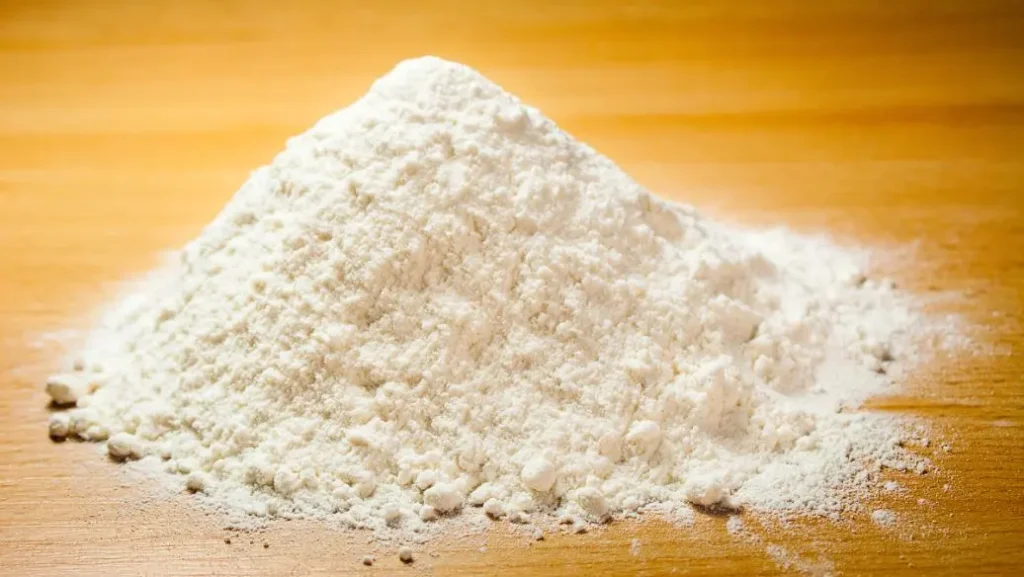
Most industrial barium sulfate comes from natural barite deposits, mined worldwide. These ores vary in purity and particle size, influencing their suitability for specific uses. For premium applications, synthetic grades of BaSO₄ are produced with tighter control over purity and particle distribution.
Common Misconceptions and Local Usage
A frequent misconception is confusing barite with barium sulfate powder—while barite is the natural mineral form, processing refines it into a fine powder. In some regions, local barite’s quality may limit its use, requiring import or synthetic alternatives for high-purity needs.

Understanding these chemical and physical fundamentals explains why barium sulfate remains a backbone mineral in industries ranging from manufacturing to medicine. Its resilient structure and unique properties meet diverse and demanding market requirements worldwide.
Barium Sulfate in Energy and Manufacturing
Barium sulfate is a heavy hitter in many industrial sectors. Its unique properties make it indispensable in oil and gas drilling, coatings, pigments, and even paper, rubber, and ceramics production.
Role in Oil and Gas Drilling
Weighting Agent: Barium sulfate powder is widely used as a drilling mud weighting agent to balance downhole pressure and prevent blowouts.
Challenges: Managing particle size and purity is crucial to avoid equipment wear and maintain mud performance.
Oilfield Barite Applications: High-purity BaSO4 with controlled particle size distribution (PSD) ensures effective drilling and reduces formation damage.
Use in Coatings and Pigments
Opacity & UV Reflection: Barium sulfate improves paint opacity and boosts UV resistance, extending product life.
Industrial Pigment Extender: It acts as a filler, enhancing durability and lowering cost without compromising quality.
Applications in Paper, Rubber, and Ceramics
Adds brightness and smoothness to paper.
Acts as a reinforcing filler in rubber.
Improves whiteness and mechanical properties in ceramics.
Market Demand & Jet Milling Case Study
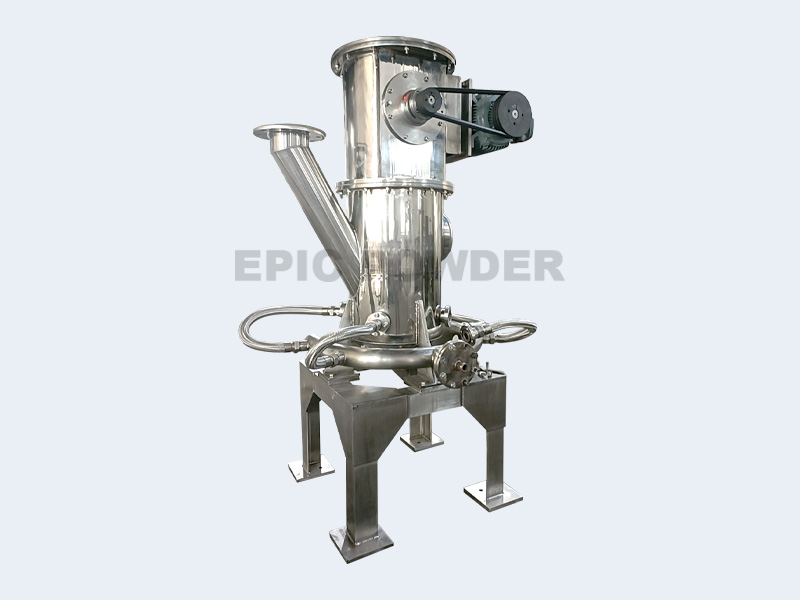
The demand for micronized barium sulfate continues to rise due to its superior performance in coatings and drilling. Epic Powder’s use of fluidized-bed jet milling produces powders with feed size 100 mesh and D100 at 4.6µm, delivering output rates around 105 kg/h with air consumption of 10 m³/min. This precision milling improves particle uniformity, purity, and dispersion in products.
For advanced jet milling techniques on industrial minerals like barite, see detailed overviews of fluidized-bed jet milling technology and processes.
| Application | Key Benefit | Typical Particle Size (D100) | Cost Impact |
| Drilling Mud Weighting | Pressure control & stability | 10-45 µm | Medium |
| Coatings & Pigments | Opacity & UV protection | <5 µm | Cost-effective |
| Paper & Rubber Fillers | Brightness & durability | 3-10 µm | Reduces material |
| Ceramics | Whiteness & strength | 2-8 µm | Adds value |
Using high-purity, finely milled barium sulfate saves costs, improves quality, and supports growing industrial needs worldwide.
Medical Marvel: Safe Contrast for Life-Saving Diagnostics
Barium sulfate is a trusted radiocontrast agent widely used in gastrointestinal (GI) imaging. Its unique density and insolubility make it ideal for outlining the digestive tract during X-rays and CT scans without being absorbed into the body. When swallowed or introduced as an enema, barium sulfate powder creates a clear contrast on images, helping doctors spot abnormalities like blockages, ulcers, and tumors with precision.
Before diagnostic procedures, patient preparation is straightforward but crucial—usually involving fasting to ensure the GI tract is clear for optimal imaging. The safety profile of barium sulfate is excellent, with regulatory approvals worldwide, including USP grade barium sulfate ensuring pharmaceutical purity and safety.
Recent advances focus on ultra-fine pharma-grade powders that improve suspension stability, enabling smoother ingestion and better image resolution. These micronized barium sulfate suspensions reduce settling, ensuring consistent contrast throughout the procedure, enhancing both patient comfort and diagnostic accuracy. For those interested in how fine particle size impacts performance, exploring jet mill processing technologies can provide valuable insights into producing these advanced contrast agents.
Achieving Micron-Level Excellence with Jet Milling
When it comes to barium sulfate, particle size matters a lot—especially powders under 10 microns. Finer particles mean better suspension stability, higher opacity for coatings, and improved flow properties in medical suspensions. Achieving consistent sub-10 micron powders can be tricky with traditional ball milling, which often struggles to deliver tight particle size distribution (PSD) and pure outputs.
That’s where fluidized-bed jet milling stands out. Unlike ball milling, jet mills use high-velocity air streams to grind particles by collision, producing ultra-fine, clean powders without contamination. This technology allows precise control over particle size, reaching feed sizes like 100 mesh with D100 values near 4.6 µm efficiently. Compared to ball mills, jet milling offers:
Higher purity due to the lack of grinding media contamination
Better particle uniformity with narrow size distribution
Improved production efficiency and repeatability
Performance benchmarks for jet milling barium sulfate showcase output rates of over 100 kg/h (for example, using the MQW 10 model with air consumption around 10 m³/min), making it a reliable choice for scaling industrial production without sacrificing quality.
For industrial users aiming for consistency, here are some optimization tips:
Regularly monitor particle size distribution to adjust milling parameters
Ensure consistent feed size for smooth operation
Optimize airflow rates and pressure settings to balance output and fineness
Precision in processing translates into better end-product performance across markets—whether for oilfield barite, high-purity USP grade BaSO4, or fine pharmaceutical powders.
Safety, Sustainability, and Future Horizons
Handling barium sulfate safely starts with recognizing its generally low toxicity but maintaining proper workplace hygiene. Dust control and using personal protective equipment help keep exposure below recommended limits. Regular monitoring is essential to meet occupational safety standards and prevent inhalation risks from fine barium sulfate powder.
On the sustainability front, natural barite deposits remain the primary source, but responsible mining practices are critical to reduce environmental impact. Recycling drilling muds that contain barite and sourcing synthetic or high-purity BaSO4 grades support greener supply chains. Sustainable barite sourcing not only protects ecosystems but also ensures long-term market stability.
Looking ahead, barium sulfate is a key material in emerging technologies. Nanotech applications leverage ultra-fine barium sulfate particles for enhanced performance in solar-reflective coatings, which improve energy efficiency in buildings. Meanwhile, the electric vehicle sector explores BaSO4 as a filler in battery components to enhance durability and thermal stability.
Industry growth is projected to remain strong through 2030, driven by demand in oilfield barite applications, medical radiocontrast agents, and advanced industrial pigments. Businesses investing in expert particle analysis and precision milling strategies will stay competitive in these evolving markets. For deeper insights on achieving high-quality barium sulfate or other powder processing, exploring advanced methods like fluidized-bed jet milling can be invaluable. Please see our detailed description of the application of jet pulverizer and equipment selection for reference.
Epic Powder
EPIC powder focus on R&D of grinding ultra-fine and ultra-pure powder pulverization and powder industry solutions. We independently research and develop jet mills and air classifiers that are widely used in the production of ultrafine powders of non-metallic minerals such as calcium carbonate, talc, marble, etc. Please contact us for your tailored-made powder solution.

“Thanks for reading. I hope my article helps. Please leave a comment down below. You may also contact EPIC Powder online customer representative Zelda for any further inquiries.”
— Jason Wang, Senior Engineer